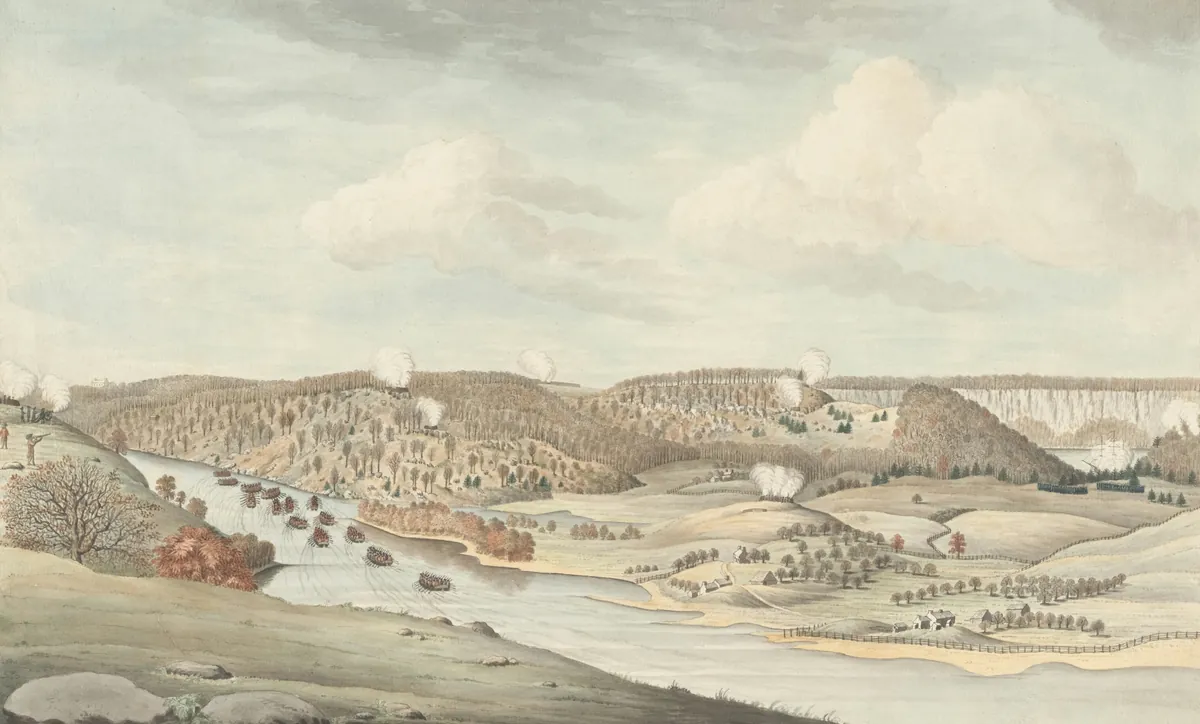
Battle of the Boyne (Orangemen's Day) in United Kingdom
Country-specific marketing context and ideas
Popularity in United Kingdom
There isn’t a definitive 2026 popularity ranking yet for “Battle of the Boyne (Orangemen’s Day)” across the United Kingdom as a whole, because its observance is highly regional rather than nationwide.
Short answer
In 2026, it’s best described as:
- Very significant in Northern Ireland
- Limited to low recognition in most of England, Scotland, and Wales
- Not a major UK-wide public holiday or broadly celebrated national event
What popularity looks like in practice
For 2026, the day is likely to have:
- High visibility in Northern Ireland, especially within Unionist and Protestant communities
- Parades, marches, and commemorative events organized by Orange Order groups
- Strong cultural and political relevance in certain local areas
- Low mainstream engagement across the rest of the UK
Important 2026 calendar note
The traditional date is 12 July. In years when the 12th falls on a Sunday, major observances are often held on 13 July instead. For 2026, 12 July is a Sunday, so the main public observance may shift to Monday, 13 July 2026 in places where it is officially marked.
If you’re thinking in “popularity” terms
A useful way to frame it:
- Northern Ireland: high awareness / high participation in some communities
- Scotland: some recognition in areas with Orange traditions, but much smaller than Northern Ireland
- England and Wales: generally low awareness and limited celebration
Marketing takeaway
If you’re evaluating this for campaigns, audience planning, or seasonal content:
- Treat it as a regional cultural date, not a broad UK moment
- It matters most for Northern Ireland-targeted communications
- Use extra care with tone, symbolism, and community sensitivities, since it can be culturally and politically charged
If you want, I can also give you:
1. a Google Trends-style popularity estimate for the UK,
2. a regional breakdown by nation, or
3. a marketing relevance assessment for planning 2026 campaigns.
Trends in United Kingdom
For the United Kingdom, Battle of the Boyne (Orangemen’s Day) in 2026 is expected to follow a very region-specific pattern, with relevance concentrated almost entirely in Northern Ireland rather than across the UK as a whole.
Key UK-specific trends for 2026
- Strong concentration in Northern Ireland
- Interest and activity will remain highest in Northern Ireland, where 12 July is a major annual cultural and political date tied to Orange Order parades and commemorations.
-
In England, Scotland, and Wales, awareness is typically much lower and public engagement is limited, aside from communities with direct cultural or family links.
-
Seasonal annual spike around early to mid-July
- Search and media attention usually builds in the days leading up to 12 July, peaks around the holiday itself, and falls quickly afterward.
-
In 2026, marketers should expect this to be a short, intense window rather than a long seasonal period.
-
Localised news-driven visibility
- UK interest is often shaped less by broad national celebration and more by news coverage, including:
- parade routes
- public safety measures
- political commentary
- community relations issues
- bonfires and related local events
-
This means attention can fluctuate depending on whether events are peaceful, controversial, or receive wider broadcast coverage.
-
Public holiday relevance in Northern Ireland
- Since 12 July 2026 falls on a Sunday, the associated public holiday observance is likely to shift to Monday, 13 July 2026 in Northern Ireland.
-
That creates a more commercially relevant long-weekend effect for hospitality, travel, retail, transport, and local services.
-
Community identity remains central
- In the UK context, this is not a mainstream national retail holiday. It is primarily connected to Protestant/Unionist cultural identity in Northern Ireland.
-
Messaging from brands tends to be more cautious than celebratory unless the brand is highly local and understands the audience well.
-
Higher sensitivity for brands and advertisers
- Because the event sits close to issues of history, religion, identity, and politics, UK brands typically avoid broad campaign tie-ins.
- In 2026, the same dynamic is likely to continue: location-aware, neutral, service-led messaging will outperform overt thematic marketing.
What this means for marketers
If you’re planning UK-facing activity in 2026:
- Target Northern Ireland specifically, not the entire UK
- Prepare for a brief demand spike around 11–13 July
- Focus on practical consumer needs:
- opening hours
- transport updates
- local event information
- food, convenience, and hospitality demand
- Avoid generic “holiday celebration” creative unless you have strong local credibility
- Monitor regional news and civic guidance, since sentiment can shift quickly
Bottom line
The main UK trend for Battle of the Boyne / Orangemen’s Day in 2026 is continued high relevance in Northern Ireland, minimal relevance elsewhere in the UK, and a sharp, locally driven peak around the observed holiday period. For marketers, this is best treated as a regional cultural moment with operational and reputational considerations, not a broad national seasonal event.
If useful, I can also turn this into a Google Trends-style interpretation, a 2026 marketing calendar note, or a regional campaign recommendation.
Cultural significance
The Battle of the Boyne (Orangemen’s Day) remains one of the most culturally and politically significant commemorations in the United Kingdom, especially in Northern Ireland, in 2026.
What it commemorates
It marks the Battle of the Boyne, fought on 1 July 1690 in the old calendar, but traditionally commemorated on 12 July today. The battle saw Protestant King William III (William of Orange) defeat the deposed Catholic King James II near the River Boyne in Ireland.
Why it matters culturally
For many in the Unionist and Protestant communities, particularly members of the Orange Order, the day symbolizes:
- Protestant identity
- Loyalty to the British Crown
- Defense of civil and religious liberties
- Historical continuity and community tradition
It is often celebrated through:
- Parades and marches
- Orange Order gatherings
- Church services
- Bands, banners, and regalia
- Community events and bonfires in the surrounding period
In this context, the day functions as both a religious-cultural commemoration and a public expression of British unionist heritage.
Why it is sensitive
The cultural significance of 12 July is not shared uniformly across the UK. Its meaning is especially contested in Northern Ireland, where it can also represent:
- Sectarian division
- Triumphalism
- Political polarization
- A reminder of the long conflict between Unionist/Protestant and Nationalist/Catholic communities
For many Nationalists and Republicans, the celebrations are seen less as a neutral historical remembrance and more as an assertion of dominance in shared or disputed spaces. Because of this, parades have historically led to tensions over:
- Routes through Catholic or mixed neighborhoods
- Public order and policing
- Use of flags, symbols, and music
- Bonfires and political messaging
Significance in the UK in 2026
In 2026, the day continues to matter for several reasons:
1. Northern Ireland identity remains central
Questions around British identity, Irish identity, and Northern Ireland’s constitutional future remain highly visible. Orangemen’s Day continues to act as a major annual marker of identity for the unionist community.
2. It is a test of community relations
How parades and associated events are managed each year is often seen as a barometer of: - Intercommunity relations - Political temperature - Effectiveness of policing and mediation - Respect for cultural expression versus shared public space
3. Tradition and heritage are being re-framed
Some organizers present the celebrations as a matter of heritage, family tradition, and historical remembrance, rather than confrontation. In 2026, there is ongoing effort in some areas to make events appear more: - Community-focused - Tourism-friendly - Culturally legitimate within a plural society
That said, not all critics accept this reframing, and debates over inclusivity continue.
4. Wider UK relevance is limited but real
Outside Northern Ireland, the day has much less mainstream prominence, though it is still observed in parts of Scotland and by some Orange lodges elsewhere in the UK. In broader British public life, it is not a nationwide civic holiday in the way it functions socially in Northern Ireland. Its significance is therefore: - Intense regionally - Historically important nationally - Politically symbolic across the UK
Bottom line
In the UK in 2026, the Battle of the Boyne / Orangemen’s Day is best understood as a powerful identity marker rather than just a historical anniversary. For supporters, it celebrates faith, heritage, and loyalty. For critics, it can symbolize exclusion and sectarian history. Its cultural significance lies precisely in that dual role: it is both a cherished tradition and a continuing flashpoint in the politics of memory, belonging, and public space.
How it is celebrated
In the United Kingdom, the Battle of the Boyne / Orangemen’s Day is typically marked on 12 July each year, and in 2026 it falls on a Sunday.
How it’s usually celebrated
The day is most prominently observed in Northern Ireland and by some Orange Order communities in Scotland and elsewhere in the UK. Typical features include:
- Orange Order parades and marches through towns and cities
- Bands, especially flute, pipe, and drum bands
- Church services and religious observances
- Community gatherings and family events
- In some areas, bonfires are associated with the wider commemorative period, though these are more closely linked to the days beforehand
Where it’s most visible
Celebrations are by far most significant in Northern Ireland, where 12 July is a major cultural and political date for many in the unionist and Protestant community. You may also see events in parts of Glasgow and western Scotland, though on a smaller scale.
Public life and atmosphere
- In Northern Ireland, the day is a public holiday substitute when it falls on a weekend, so in 2026 the public holiday is expected on Monday 13 July.
- Many businesses may close or operate reduced hours in areas with major parades.
- Traffic disruption is common where marches take place.
Important context
The celebration is culturally significant but also sensitive and sometimes controversial, because it is tied to identity, history, and sectarian divisions. While many events are peaceful and community-focused, some locations can see heightened tensions.
If you want, I can also give you: - a 2026-specific guide for visitors - a Northern Ireland vs. Scotland comparison - or a short, plain-language summary.
Marketing advice
For UK campaigns around Battle of the Boyne (Orangemen’s Day) 2026, use highly localised targeting: focus activity on Northern Ireland and selected Scottish communities, while treating the rest of the UK as low-relevance or high-sensitivity unless there is a clear audience fit. Keep messaging factual and community-aware rather than celebratory, avoid political or sectarian language, review creatives for flags, parades, bonfires, and Orange Order imagery, and schedule paid media with extra moderation and community management around 12 July and the surrounding weekend.
Marketing ideas
Build a 2026 “Heritage & Community” campaign around Battle of the Boyne / Orangemen’s Day with short-form video, local-history storytelling, and geo-targeted social ads highlighting parades, music, and family-friendly activities in participating UK towns. Partner with local tourism boards, pubs, and retailers on themed trails, limited-time offers, and event-day bundles, then capture demand with a dedicated landing page, email countdowns, and SMS reminders.
Marketing channels
For promoting content or events tied to Battle of the Boyne (Orangemen’s Day) in the UK in 2026, the most effective channels are Facebook, local radio, community newspapers, and WhatsApp/community email lists. Facebook is strong for reaching older and community-based audiences through local groups and event promotion, while local radio and newspapers work well in areas with established parade and cultural traditions; WhatsApp and email lists help organisers drive turnout through trusted, direct community networks.
Marketing examples
Here’s a hypothetical 2026 marketing campaign for Battle of the Boyne / Orangemen’s Day in the United Kingdom, framed in a way a marketing professional could evaluate.
Because this event is historically and politically sensitive, the strongest campaign approach would focus on heritage, community stewardship, tourism, safety, and cultural education, rather than provocative or triumphalist messaging. That makes it more brand-safe for public bodies, tourism boards, local councils, and partner organizations.
Hypothetical Campaign:
“Threads of Heritage 2026”
Campaign type
Integrated cultural tourism and community engagement campaign
Geographic focus
Northern Ireland, with supporting reach in Scotland and selected UK heritage audiences
Campaign owner
A tourism board, local council partnership, or heritage/cultural organization
Campaign period
May–July 2026, peaking around 12 July 2026
1. Campaign Objective
Position Battle of the Boyne / Orangemen’s Day as:
- a significant part of regional heritage
- a well-managed visitor experience
- an opportunity for local economic uplift
- a moment for education, music, craftsmanship, and community stories
Primary goals
- Increase domestic and regional visitor attendance by 12–18%
- Improve positive sentiment around event organization and visitor experience
- Drive hotel, restaurant, and transport bookings in host areas
- Expand engagement among younger adults aged 18–34
- Reduce perception of the event as inaccessible to non-locals
2. Strategic Insight
The challenge with marketing this event is that awareness exists, but approachability does not.
Many potential visitors perceive it as: - “not for me” - hard to understand - logistically difficult - politically charged
So the campaign reframes attendance around: - heritage discovery - festival atmosphere - music and pageantry - local storytelling - responsible event planning
Core insight
People are more likely to engage with a contentious or unfamiliar cultural event when it is presented through human stories, practical visitor information, and shared heritage themes.
3. Target Audiences
Primary audience
Domestic cultural explorers
Adults 25–54 in Northern Ireland, Scotland, and northern England interested in:
- history
- heritage tourism
- local festivals
- music and community events
Secondary audience
Younger social-first audiences
Adults 18–34 who respond to:
- visual spectacle
- short-form video
- behind-the-scenes content
- authentic local voices
Tertiary audience
Diaspora and heritage visitors - UK and Ireland family-history audiences - international visitors already planning summer travel in Northern Ireland
Community audience
- local residents
- parade participants
- small businesses
- transport and hospitality partners
4. Brand Positioning
Positioning statement
A living heritage moment that brings history, music, tradition, and local communities into focus.
Tone
- respectful
- informative
- welcoming
- community-minded
- operationally confident
What the campaign avoids
- sectarian framing
- antagonistic language
- victory rhetoric
- exclusionary symbolism in broad-reach ads
- sensationalism
5. Creative Idea
“Threads of Heritage”
The idea is that history is made visible through many threads: - bands and music - banners and craft traditions - family participation - local food and business - routes and gathering places - oral histories - stewardship and organization
This gives marketers a broad enough platform to tell multiple stories while keeping a unified visual and strategic identity.
Tagline options
- Threads of Heritage
- See the Story. Hear the Tradition.
- A Day of Heritage, Music, and Community
- Tradition in Motion
6. Messaging Framework
Core message
Experience a major summer heritage tradition through music, craftsmanship, local stories, and welcoming visitor planning.
Supporting pillars
a) Heritage
“Discover the history and traditions behind one of the UK’s most distinctive summer commemorations.”
b) Spectacle
“From marching bands to banners and ceremonial pageantry, the day offers a striking visual and musical experience.”
c) Community
“Meet the people, families, and local groups who keep traditions alive year after year.”
d) Visitor ease
“Plan your day with clear travel guidance, family-friendly tips, and curated local recommendations.”
e) Local economy
“Turn a day visit into a weekend stay with food, shopping, museums, and nearby attractions.”
7. Channel Strategy
Paid media
Social ads
Platforms: - Facebook - Instagram - TikTok -