United Kingdom
In the United Kingdom, St Patrick’s Day is expected to be moderately popular in 2026, with especially strong visibility in Northern Ireland, London, Birmingham, Liverpool, Manchester, and other cities with large Irish communities.
What “popularity” looks like in the UK
For marketers, this is less of a universal national retail event than Christmas, Halloween, or even Valentine’s Day. It tends to perform in a few distinct ways:
-
Very strong in Northern Ireland
St Patrick’s Day is a public holiday there, so awareness and participation are naturally high. -
Strong in Irish diaspora hubs
Cities with established Irish heritage often see: - parades
- pub promotions
- themed food and drink campaigns
- local community events
-
hospitality-led social activity
-
Moderate nationally across Great Britain
In England, Scotland, and Wales, it has broad recognition but lighter participation. Many consumers are aware of the occasion, but only certain sectors really benefit.
Most relevant sectors
If you’re evaluating popularity from a commercial angle, these categories tend to see the most traction:
- Pubs, bars, and nightlife
- Beer, whiskey, and beverage brands
- Hospitality and live events
- Casual dining and fast food
- Retail for novelty/theme-led products
- Tourism and local destination marketing
Audience behavior in 2026
For 2026, consumer engagement in the UK is likely to follow the usual pattern:
- High social and experiential relevance
- Moderate retail relevance
- Lower mainstream gifting relevance
- Strong event-driven spikes around mid-March
Because 17 March 2026 falls on a Tuesday, celebrations may split across: - the weekend before - the day itself - the weekend after in some venues
That timing matters for campaign planning, especially in hospitality and paid social.
Practical marketing takeaway
For UK marketers, St Patrick’s Day is popular enough to be commercially useful, but not broad enough to justify a mass-market strategy unless the brand has a natural fit.
It works best when: - your audience is urban and social - your product aligns with celebration or community - you can activate locally - you use playful creative without leaning on clichés
Simple popularity verdict for the UK in 2026
If you want a concise read:
- Northern Ireland: High
- Major UK cities with Irish heritage: Medium to high
- UK overall: Medium
If useful, I can also give you:
1. a Google Trends-style popularity forecast for the UK,
2. a marketing calendar assessment versus other March events, or
3. campaign ideas for St Patrick’s Day 2026 in the UK.
For the United Kingdom in 2026, there are a few clear St Patrick’s Day trends that stand out from a marketing and consumer perspective.
1. Celebration remains strong, but it’s increasingly localised
St Patrick’s Day continues to perform well across the UK, especially in cities with strong Irish heritage or large hospitality scenes such as London, Birmingham, Manchester, Liverpool, Glasgow, and Belfast. What’s notable is that activity is not limited to Irish pubs anymore. Restaurants, retailers, entertainment venues, and family attractions increasingly build their own themed activations around the date.
2. Pubs and hospitality lead the commercial momentum
In the UK, St Patrick’s Day is still heavily driven by the pub, bar, and casual dining sectors. Promotions around: - Irish stout and whiskey - themed food menus - live music nights - group bookings - limited-time drinks offers
are likely to dominate the seasonal marketing landscape. For brands in hospitality, the event works best as a social occasion rather than a deeply gift-driven retail moment.
3. Premiumisation is growing
UK consumers are showing more interest in premium Irish drinks rather than just novelty-led celebration. That means better-performing campaigns are likely to feature: - premium whiskey tastings - craft stout pairings - elevated Irish-inspired menus - curated experiences rather than only discounting
This reflects a broader UK trend where consumers still want occasions and experiences, but with more selective spending.
4. More brands are using it as a cultural and content moment
St Patrick’s Day in the UK is increasingly used as a content and engagement opportunity, particularly on social channels. Brands are leaning into: - green-themed visual identity - playful short-form video - Irish recipe content - pub culture references - local event tie-ins
The strongest executions tend to feel timely and socially native rather than overly promotional.
5. Sensitivity and authenticity matter more
UK audiences are more responsive to St Patrick’s Day campaigns that feel authentic, culturally aware, and regionally relevant. There is growing awareness that simply using shamrocks, green filters, and generic “Irish” messaging can feel lazy or outdated. Campaigns with: - real links to Irish culture - partnerships with Irish-owned brands - references to local community events - support for live music or cultural programming
are likely to resonate better.
6. Retail sees a smaller but still visible seasonal lift
Compared with Christmas, Easter, or Halloween, St Patrick’s Day remains a secondary retail occasion in the UK. Even so, supermarkets, convenience stores, and off-licence chains often create themed space for: - Irish beer and spirits - party food - green confectionery or novelty items - meal deals for at-home celebrations
The strongest retail performance is usually tied to food-and-drink missions, not broad gifting.
7. At-home celebration continues to coexist with going out
One ongoing UK trend is the split between: - consumers celebrating in pubs or city centres - consumers creating a smaller, more affordable at-home occasion
This creates room for both on-trade and off-trade marketing strategies. Retailers and drinks brands can benefit from “bring the pub home” messaging, while venues can win by emphasising atmosphere, entertainment, and bookable experiences.
8. Irish identity is especially important in Northern Ireland
In Northern Ireland, St Patrick’s Day has a different cultural weight than in many parts of Great Britain. Marketing there tends to require more nuance, with stronger attention to: - community relevance - cultural expression - local events and public programming - tourism and civic celebration
Brands operating UK-wide should avoid treating the whole market as homogeneous.
9. Tourism and city events still play a role
Major UK cities often use St Patrick’s Day to support: - destination marketing - footfall into hospitality districts - parades and public performances - community celebrations
This makes the moment especially useful for place marketing, transport-linked promotions, and partnerships between local councils, venues, and sponsors.
10. Value remains important in 2026 planning
In 2026, UK consumers are still likely to be value-conscious, even when participating in social occasions. That means marketing is likely to perform best when it balances: - festive energy - affordable indulgence - clear value - memorable experience
Deep discounting is not the only route. Bundles, sharers, fixed-price menus, and event-led offers are likely to be more effective than broad price cuts alone.
What this means for marketers
For the UK, St Patrick’s Day in 2026 is best understood as: - a hospitality-first occasion - strongest in urban centres and Irish-connected communities - increasingly shaped by **authenticity
St Patrick’s Day in the United Kingdom in 2026 is both a celebration of Irish heritage and a reflection of the UK’s complex cultural ties with Ireland. Observed each year on 17 March, it has religious roots, community meaning, and a strong public-facing role in music, festivals, identity, and tourism.
Why it matters in the UK
St Patrick is the patron saint of Ireland, but his feast day has significance well beyond Ireland itself. In the UK, the day is especially meaningful because of the long history of Irish migration to Britain and the deep cultural, political, and family connections between the two islands.
For many people in the UK, St Patrick’s Day is a way to celebrate:
- Irish identity and ancestry
- Catholic and Christian traditions
- Community pride
- Irish contributions to British society
- Shared cultural exchange through music, food, dance, and sport
In cities with large Irish communities such as London, Birmingham, Liverpool, Manchester, Glasgow, and Leeds, the day often carries a strong community and cultural presence.
Special significance in Northern Ireland
In the UK context, Northern Ireland is especially important when discussing St Patrick’s Day.
St Patrick is one of the few cultural and religious figures who can, at least in theory, be claimed across different traditions on the island of Ireland. Because Northern Ireland has a history shaped by political and sectarian division, St Patrick’s Day can sometimes function as:
- A celebration of Irish culture and nationalism
- A religious feast day
- A broader cultural event with cross-community potential
In practice, the tone of celebrations can vary depending on place and organiser. For some, it is an expression of Irish national identity. For others, it is a more general cultural or family occasion. In recent decades, many organisers have tried to present it as an inclusive cultural festival, focused on arts, language, music, and local heritage.
How it is celebrated in the UK
Across the UK, St Patrick’s Day celebrations usually blend traditional and modern elements. Common features include:
- Parades and street festivals
- Irish folk music and dance performances
- Community events organised by Irish cultural centres
- Church services and religious observance
- Pub promotions and themed hospitality events
- Family-friendly cultural programming
- Green lighting of landmarks or themed public displays
London typically hosts one of the largest public celebrations in the UK, often including a parade, stage performances, food stalls, and cultural showcases. Other cities also run festivals that highlight the influence of Irish communities in local life.
Religious roots versus commercial celebration
The cultural significance of St Patrick’s Day in the UK sits between two different meanings:
1. Religious and heritage-based meaning
Historically, the day marks the feast of St Patrick and remains important for Christians, especially within Catholic communities. It is tied to worship, remembrance, and Irish spiritual heritage.
2. Modern popular culture
It has also become a highly commercialised celebration associated with:
- Wearing green
- Socialising in pubs and bars
- Branded food and drink promotions
- Wider “Irish-themed” entertainment
This split is important culturally. For some people in the UK, the modern version helps keep Irish culture visible and accessible. For others, it can reduce a rich heritage to stereotypes.
Cultural significance in 2026 specifically
In 2026, the significance of St Patrick’s Day in the UK is likely to remain shaped by several ongoing themes:
Irish identity in a multicultural Britain
The UK continues to frame national celebrations increasingly through the lens of diversity, inclusion, and heritage recognition. St Patrick’s Day fits into that environment as a visible expression of one of Britain’s most historically significant migrant communities.
Tourism and city branding
Major UK cities use St Patrick’s Day as a platform for:
- Attracting visitors
- Supporting hospitality and retail
- Showcasing multicultural events calendars
- Promoting local cultural districts and Irish venues
For marketers and place-branding teams, the event offers a mix of heritage storytelling and high-footfall public engagement.
Soft diplomacy and UK-Ireland relations
St Patrick’s Day often carries diplomatic value too. In 2026, it is likely to continue serving as a moment for public recognition of the relationship between the UK and Ireland, especially through cultural events, official messages, and civic participation.
Reframing authenticity
There is growing sensitivity in the UK around how cultural festivals are represented. That means 2026 celebrations may place more emphasis on:
- Authentic Irish arts and language
- Community-led programming
- Avoiding caricatures or outdated stereotypes
- Inclusive events beyond alcohol-led celebrations
This matters especially for brands, institutions, and local authorities that want to engage respectfully.
What it means for different audiences
In the United Kingdom, St Patrick’s Day 2026 falls on Tuesday, 17 March 2026, and it’s typically celebrated in a mix of Irish cultural, religious, community, and social traditions.
What celebrations usually look like in the UK
1. Parades and public festivals
Many UK cities with strong Irish communities mark the day with: - Street parades - Live music and dance performances - Family-friendly festivals - Cultural showcases featuring Irish heritage
Cities such as London, Birmingham, Manchester, Liverpool, Glasgow, and Belfast often host some of the most visible celebrations.
2. Irish music, dance, and pub events
A big part of the day is social: - Pubs and bars run St Patrick’s Day specials - Venues host traditional Irish folk music - Some events feature céilí dancing or staged Irish dance performances - People often gather with friends wearing green clothing or shamrock-themed accessories
3. Community and cultural events
Beyond nightlife, celebrations often include: - Irish cultural centre programming - Food markets or themed menus - School or community performances - Local events organised by Irish associations and diaspora groups
4. Religious observance
Because St Patrick’s Day is also a feast day, some people mark it through: - Church services - Special masses, particularly in Catholic communities - Reflection on St Patrick’s religious significance
5. Landmark lighting and themed branding
Some landmarks, buildings, and organisations may mark the day by: - Lighting buildings in green - Running St Patrick’s Day campaigns - Decorating shopfronts, offices, and hospitality venues with Irish-themed visuals
How it differs across the UK
Northern Ireland
St Patrick’s Day is especially significant in Northern Ireland, where it is an official public holiday. Celebrations can be large-scale, particularly in Belfast and Derry/Londonderry, with festivals, concerts, and community events.
England, Scotland, and Wales
In the rest of the UK, it is not a public holiday, so celebrations tend to happen: - In the evening after work - Over the nearest weekend - Through city-centre events and hospitality promotions
Typical symbols and traditions
Common elements include: - Green clothing - Shamrocks - Irish flags - Guinness and Irish whiskey promotions - Traditional Irish food and drink - Irish cultural references used in décor, entertainment, and advertising
For 2026 specifically
Since 17 March 2026 is a Tuesday, many UK celebrations are likely to be split between: - Events on the day itself - Larger parties and city festivals on the weekend before or after
If useful, I can also break this down by city, or give you a 2026-focused list of likely UK St Patrick’s Day events and marketing trends.
In the UK, plan St Patrick’s Day 2026 activity around Tuesday 17 March, using the weekend before to build momentum with paid social, email, and in-store or venue promotions. Focus on locally relevant themes like Irish food and drink, live music, community events, and city-specific celebrations in places such as London, Birmingham, Liverpool, and Manchester, while avoiding overly stereotypical creative. Use short-term offers, geo-targeted ads near pubs, retail sites, and event locations, and make sure promotions are CAP Code compliant, especially if marketing alcohol.
For St Patrick’s Day 2026 in the UK, run a “Luck of the Local” campaign that partners with Irish pubs, bakeries, or musicians for limited-time offers, co-branded content, and in-store events on 17 March. Pair it with a social giveaway featuring green-themed products, user-generated content, and a prize for the best outfit, party setup, or toast shared on Instagram or TikTok. If you have physical locations, add a themed window display, shamrock trail, or QR-code treasure hunt to drive footfall and collect first-party data.
For St Patrick’s Day 2026 in the United Kingdom, the most effective marketing channels are paid and organic social media, especially Instagram, TikTok, and Facebook, because they are ideal for promoting themed food, drink, fashion, and event-led content with strong sharing potential. Email marketing is also highly effective for driving timely offers and event bookings, while local search and Google Ads help capture high-intent audiences looking for pubs, restaurants, parties, and seasonal promotions. Outdoor advertising and in-venue promotions can work especially well in cities with strong footfall and nightlife, such as London, Birmingham, Manchester, and Liverpool.
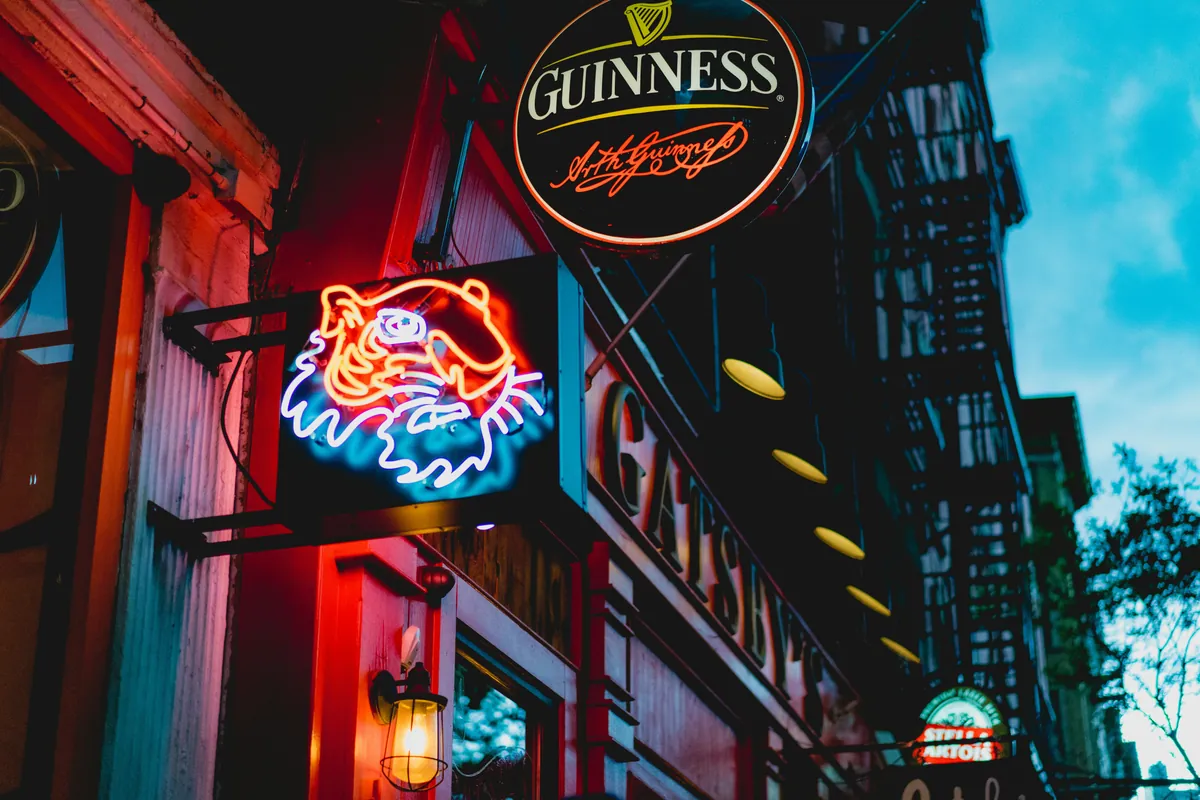
Example: Guinness “St. Patrick’s Day — Paint the Town Black”
A strong hypothetical UK campaign for 2026
Guinness is one of the most natural brands to own St. Patrick’s Day in the UK, given its Irish heritage, strong on-trade presence, and high cultural relevance around pubs, celebration, and social rituals. A 2026 campaign could be highly effective if it blends brand heritage with digital participation and in-venue activation.
Campaign Overview
Campaign name: Paint the Town Black
Brand: Guinness
Market: United Kingdom
Timing: 1–17 March 2026
Objective:
- Drive incremental sales in pubs, bars, and retail
- Increase brand engagement among 25–44-year-olds
- Own cultural conversation around St. Patrick’s Day in the UK
- Strengthen Guinness as the go-to drink for the occasion
Big Idea
Turn St. Patrick’s Day from a one-day pub event into a two-week cultural build-up, where cities across the UK “paint the town black” in celebration of Guinness, Irish creativity, and shared social moments.
Rather than leaning only on clichés like shamrocks and green beer, the campaign positions Guinness as the authentic, premium choice for celebrating St. Patrick’s Day with style, music, and community.
Target Audience
Primary
- Adults aged 25–44
- Urban pub-goers in cities such as London, Manchester, Birmingham, Liverpool, Glasgow, and Edinburgh
- Socially active consumers who enjoy live events and group occasions
Secondary
- Retail shoppers planning at-home St. Patrick’s Day celebrations
- Younger legal-drinking-age consumers engaging with the occasion via TikTok, Instagram, and experiential pop-ups
Campaign Elements
1. Out-of-Home and City Takeovers
Guinness launches bold black-and-cream creative across key UK cities.
Examples:
- Digital billboards with lines like:
“17 March. Leave room for the perfect pour.”
“This St. Patrick’s Day, make it a night worth waiting for.”
- Branded takeovers near pub districts, train stations, and shopping centres
- Select landmarks lit in Guinness black and white rather than expected green, creating standout visual distinctiveness
Why it works:
Most St. Patrick’s Day marketing defaults to green. Guinness would differentiate by owning its own visual identity while still participating in the cultural moment.
2. Pub Activation Programme
Partner pubs across the UK become official Guinness St. Patrick’s Day Houses.
Included in the activation: - Branded POS kits, glassware, bar runners, and window vinyls - Limited-edition St. Patrick’s Day pints and merchandise - Live Irish music nights in the week leading up to 17 March - “Perfect Pour Hour” promotions at participating venues - Digital pub finder showing nearby official Guinness celebration spots
Why it works:
The on-trade is where Guinness wins St. Patrick’s Day. Creating a branded pub network strengthens visibility, trial, and occasion-based consumption.
3. Social Media Challenge: #SplitTheG
A UK-wide social push built around the already culturally familiar Guinness drinking ritual.
Execution: - Encourage consumers to post their best “Split the G” attempt on TikTok and Instagram Reels - Use creators, pub personalities, rugby figures, and music talent to seed participation - Weekly prizes: pub tabs, limited Guinness merchandise, tickets to live music events - Grand prize: a St. Patrick’s Day VIP experience in Dublin or a premium UK city celebration package
Why it works:
It takes an existing fan behaviour and packages it into a shareable format. That lowers friction and increases organic participation.
4. Limited-Edition Retail Packaging
Retail multipacks and cans feature a special St. Patrick’s Day design for UK supermarkets and convenience stores.
Features: - Premium green-and-black design treatment - QR code linking to: - playlists for hosting - food pairing ideas - nearby event listings - AR filters for social sharing
Retail partners could include: - Tesco - Sainsbury’s - Asda - Morrisons - Co-op
Why it works:
This extends the campaign beyond pubs and into at-home celebrations, capturing shoppers who want to mark the occasion privately or economically.
5. Experiential Pop-Up: “The Guinness House”
A temporary immersive brand space in London, with smaller pop-ups in Manchester and Birmingham.
Experience could include: - Guinness tasting masterclasses - Irish food pairings - Live bands and DJs - Photo moments styled around the Guinness visual world - Merchandise customisation station