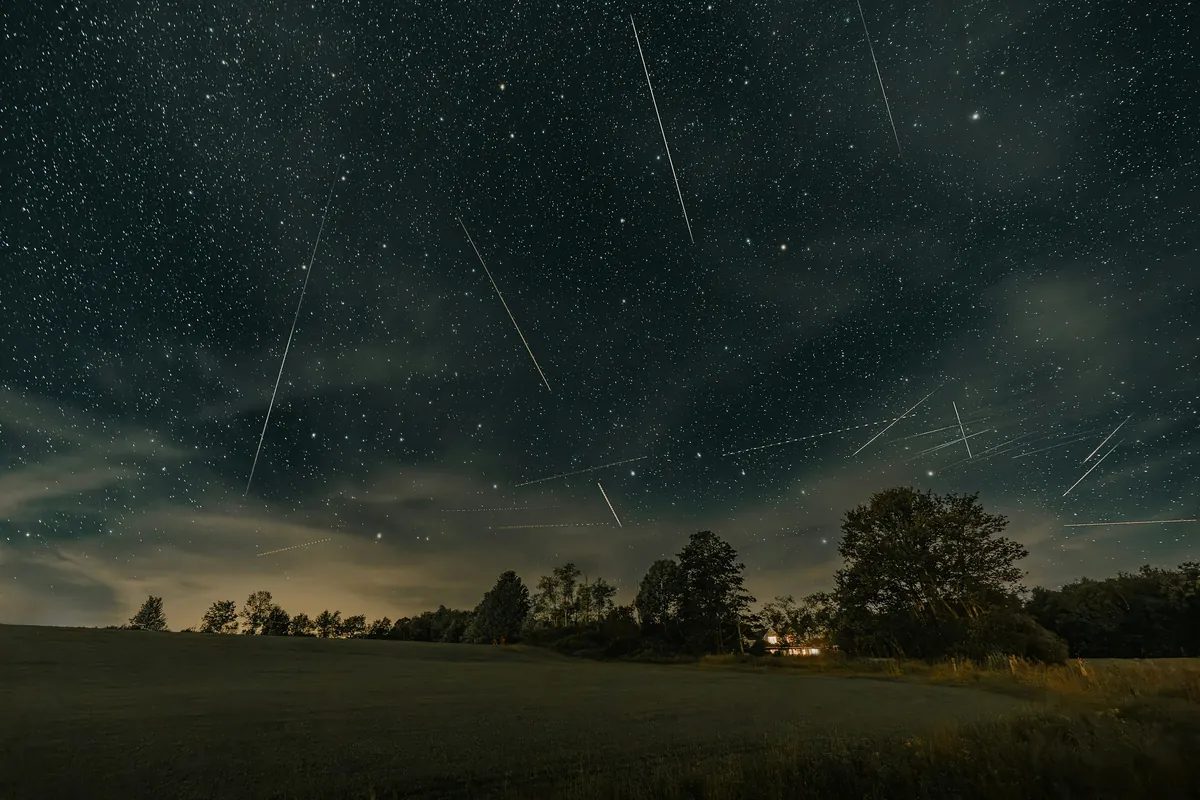
Perseid Meteor Shower
Space and Astronomy Events 2026

Perseid Meteor Shower 2026

Global and country-specific marketing guidance

Overview

Perseid Meteor Shower — United Kingdom, 2026

The Perseid Meteor Shower is one of the most widely recognized annual astronomy events, typically peaking in mid-August and drawing strong public interest thanks to its visibility, seasonal timing, and visual appeal. In the United Kingdom in 2026, it offers a timely opportunity for brands to build seasonal, experience-led campaigns around themes like wonder, nighttime discovery, summer evenings, and shared outdoor moments.

From a marketing perspective, the event is especially useful for travel, hospitality, retail, food and beverage, lifestyle, entertainment, and family-focused brands. Campaigns can center on meteor-watching experiences, late-night offers, themed content, outdoor product promotion, or social storytelling tied to “make a wish,” “limited-time moments,” or “don’t miss the peak” messaging. Because the Perseids are recurring but feel urgent due to their short peak window, they work well for countdown campaigns, event-led promotions, and engagement-driven social content.

For UK audiences, the best performance is likely to come from campaigns that emphasize weather awareness, location-based viewing tips, local event partnerships, and visually striking creative. The event’s natural shareability also makes it a strong fit for UGC, influencer collaborations, and real-time digital activation.

Global trends and information

Different celebration dates

The Perseid Meteor Shower in 2026 does not actually occur on different calendar dates because of country-specific schedules. It’s a global astronomical event, so the shower itself peaks at the same moment worldwide. What does differ by country is:

  1. Local date and time of the peak
  2. Visibility conditions
  3. Whether observers refer to the “best night” before or after peak

Global peak vs. local date

Astronomers usually give the Perseids peak in UTC or another standard time reference. Because countries are in different time zones, that same peak moment can fall on:

  • Late night on one date in one country
  • Early morning of the next date in another country

So a source in one country may list the Perseids peak as August 12, 2026, while another may list August 13, 2026, even though they’re describing the same event.

Why countries may list different dates

Here’s what causes the variation:

  • Time zones: A peak occurring around midnight UTC can shift into the previous or next local calendar day elsewhere.
  • Observing convention: Many skywatching guides focus on the overnight viewing window, such as “night of August 12–13.”
  • Peak-width interpretation: Meteor showers are not instant-only events. The Perseids build and fade over several nights, so some organizations emphasize the night with the darkest sky or the best local observing hours rather than the exact mathematical peak.

Example of how this can vary

If the peak were listed at a given UTC time, then:

  • In the United States, it might fall on the evening of August 12
  • In the UK, it might still be August 13 in the early hours
  • In India, Japan, or Australia, it could be clearly August 13 local time

That’s why different countries may publish slightly different “peak dates.”

Do the Perseids themselves change by location?

Not in terms of the shower’s orbital cause. But the viewing experience can vary a lot by country because of:

  • Moon phase and moonrise time
  • Weather and cloud cover
  • Latitude
    The Perseids are generally best seen in the Northern Hemisphere, so countries farther north often get better displays.

Best way to describe the 2026 Perseids

For marketing, publishing, or editorial clarity, the safest wording is:

  • “Perseid Meteor Shower peaks around August 12–13, 2026, depending on local time zone.”

That phrasing avoids country-by-country date conflicts while staying accurate.

If you want, I can also give you a country-by-country table for major markets showing how the 2026 Perseids peak date/time would likely be labeled locally.

Different celebration styles

The Perseid Meteor Shower is a global skywatching event, but the way people experience and celebrate it in 2026 will likely vary a lot by country. The biggest differences will come from visibility, local traditions, climate, tourism infrastructure, and how strongly astronomy is woven into public culture.

1. Visibility will shape the entire experience

The Perseids peak each August, but not every country gets the same viewing conditions.

  • Northern Hemisphere countries such as the United States, Canada, much of Europe, Japan, South Korea, and parts of China usually get the best views.
  • Southern Hemisphere countries like Australia, South Africa, Argentina, and Chile can still see the shower, but generally with fewer meteors and lower radiant visibility.
  • Urbanized countries with heavy light pollution, such as dense metro areas in India, Japan, the UK, or the UAE, may lean more on organized events in dark-sky reserves or observatories.
  • Rural or desert regions in places like Morocco, Chile, Namibia, or the American Southwest may turn the shower into a stronger outdoor tourism draw because of clearer skies.

In practical terms, a country with dark skies and summer weather may treat the Perseids as a major communal event, while others may experience it more through livestreams, planetariums, or media coverage.

2. Seasonal context will make celebrations feel very different

August does not feel the same everywhere.

  • In Europe and North America, the Perseids arrive during summer vacation season, making them ideal for camping, festivals, and family-friendly night events.
  • In East Asia, hot, humid weather or regional rain patterns can affect turnout, even where interest is high.
  • In Mediterranean countries like Spain, Italy, and Greece, the meteor shower may blend naturally with beach culture, holiday travel, and late-night social life.
  • In parts of the Southern Hemisphere, August is winter, so celebration may be smaller, more specialized, or centered around astronomy clubs rather than casual mass participation.

So while one country might market the Perseids as a carefree summer spectacle, another might frame it as a niche scientific or nature-based event.

3. Local culture and folklore will influence the storytelling

Many countries attach celestial events to different meanings.

  • In Spain, the Perseids are often known as the “Lágrimas de San Lorenzo” or “Tears of Saint Lawrence,” giving the event a religious and historical layer.
  • In Japan, meteor watching may connect with existing appreciation for seasonal nature moments and quiet, reflective observation.
  • In Middle Eastern or North African countries, interest may be tied to both astronomy heritage and desert stargazing traditions.
  • In countries where astrology has stronger mainstream influence, public discussion may include more symbolic or spiritual interpretations alongside scientific ones.
  • In secular, science-forward settings like parts of Northern Europe, Canada, or Germany, the event may be presented more as a public science and education moment.

This means the same meteor shower could be framed as: - a spiritual night, - a romantic outdoor gathering, - a science education event, - a tourism campaign, - or a family summer tradition.

4. Countries with strong astronomy outreach may host larger organized events

In 2026, countries with active science institutions are likely to create more structured celebrations.

Examples may include: - Public observatory nights - National park viewing events - Astronomy club meetups - Museum and planetarium programming - Livestreamed commentary from scientists

Countries such as the US, France, Germany, Japan, South Korea, and the UK often have strong public science communication networks, so their Perseid activity may feel more organized and media-friendly.

By contrast, in countries where astronomy outreach is less institutionalized, viewing may happen more informally through community groups, travel operators, schools, or social media-led gatherings.

5. Tourism boards may position the event differently by market

From a marketing perspective, the Perseids are not just an astronomy event; they are a destination experience.

Different countries could package it in distinct ways:

United States

  • National parks, desert lodges, and dark-sky destinations may market Perseid nights as part of astrotourism.
  • Messaging may emphasize camping, road trips, and nature immersion.

Spain

  • The event may be promoted with a blend of cultural tradition, summer nightlife, and spiritual symbolism.
  • Beaches and rural escapes could become focal points.

Japan

  • Promotion may focus on quiet appreciation, scenic settings, and seasonal beauty.
  • Smaller, carefully curated viewing experiences may resonate more than festival-style events.

UAE

  • High-end desert resorts may frame the shower as a

Most celebrated in

The Perseid Meteor Shower is most enthusiastically observed in countries where:

  1. It’s best visible in the Northern Hemisphere
  2. There’s a strong culture of amateur astronomy or public skywatching
  3. August weather tends to cooperate
  4. There are organized festivals, observatory events, or media attention around the peak

For 2026, the countries most likely to celebrate or actively observe the Perseids most enthusiastically include:

Top countries

  • United States – One of the biggest Perseid audiences globally, with national parks, astronomy clubs, planetariums, and dark-sky events drawing large participation.
  • Canada – Strong public interest, excellent dark-sky areas, and widespread media coverage make the Perseids a major annual skywatching event.
  • United Kingdom – The Perseids get a lot of attention from broadcasters, astronomy societies, and the public, even though weather can be unpredictable.
  • Spain – Very strong public awareness; the Perseids are popularly known as “Lágrimas de San Lorenzo” and often attract mass viewing events.
  • France – Astronomy associations and local communities often organize public viewing nights in August.
  • Italy – The Perseids are culturally well known and often tied to summer night traditions and public stargazing.
  • Germany – Active astronomy clubs and science outreach make the shower a widely followed event.
  • Japan – Strong enthusiasm for celestial events, with observatories and media frequently promoting meteor shower viewing.
  • Australia – While not as ideally placed as northern countries, astronomy enthusiasts still actively observe and promote the Perseids, especially in clearer regions.
  • Poland / Czech Republic / Hungary – Central European countries often show strong amateur astronomy participation and public interest in annual meteor showers.

Especially notable culturally

A few countries stand out not just for observation, but for cultural enthusiasm: - Spain – One of the strongest cultural connections to the Perseids. - Italy – Linked with traditional August-night skywatching and “falling stars.” - Japan – Public excitement around astronomical events tends to be high. - United States – Strong mix of science outreach and mass participation.

Important 2026 visibility note

The Perseids in 2026 should still be primarily a Northern Hemisphere event, so enthusiasm will generally be highest across: - North America - Europe - parts of East Asia

Countries in the Southern Hemisphere may observe them less prominently because the radiant appears lower in the sky.

Best short answer

If you’re looking for the countries that most typically celebrate or observe the Perseids with the most enthusiasm in 2026, the strongest picks are:

United States, Canada, Spain, Italy, France, United Kingdom, Germany, and Japan.

If helpful, I can also turn this into: - a ranked top 10 list - a 2026 visibility-by-region breakdown - or a travel-focused guide for the best countries to watch the Perseids in 2026

Global trends

Here are the key global trends connected to the Perseid Meteor Shower in 2026, viewed through a broad audience, media, travel, and public-interest lens:

1. Peak timing will drive strong worldwide attention

The Perseids are expected to peak in mid-August 2026, as they do annually, making them one of the most visible and widely followed meteor showers worldwide. Because the Perseids occur during northern hemisphere summer, they typically generate high public interest across North America, Europe, and parts of Asia where outdoor viewing conditions are more favorable and people are more likely to travel or attend nighttime events.

2. Astro-tourism will remain a major trend

A continuing global trend into 2026 is the growth of astro-tourism: - Dark-sky parks and remote observation locations are likely to promote Perseid viewing packages - National parks, deserts, mountain regions, and rural tourism boards may use the event to attract overnight visitors - Hotels, glamping sites, and nature retreats can be expected to package the meteor shower as an “experience” rather than just an astronomical event

This aligns with the broader travel trend of consumers seeking nature-based, low-light-pollution, social-media-worthy experiences.

3. Social media and short-form video will amplify visibility

The Perseids consistently perform well as a visual, shareable global event, and 2026 will likely be no different. Trends likely to continue include: - Time-lapse photography and astrophotography content on social platforms - Creator-led “how to watch” guides - Live coverage from observatories, science communicators, and weather accounts - Location-based trending conversations around best viewing spots

The meteor shower’s appeal is strengthened by its accessibility: unlike eclipses, it does not require special equipment for basic viewing.

4. Science communication and educational engagement will stay strong

The Perseids are often used by: - Schools - Science museums - Planetariums - Space agencies - Amateur astronomy groups

In 2026, these organizations will likely continue using the event to drive public STEM engagement, especially through digital explainers, livestreams, and local watch events. The Perseids are especially effective for outreach because they are recurring, easy to explain, and tied to the well-known comet Swift-Tuttle.

5. Weather and light pollution will remain major limiting factors

Globally, interest in the Perseids may be high, but actual viewing quality will vary due to: - Cloud cover - Humidity - Moonlight conditions - Urban light pollution

One broader trend is growing public awareness around dark-sky preservation and the effect of artificial light on astronomical viewing. In 2026, conversations around the Perseids may once again support advocacy for reduced nighttime light pollution, especially in Europe and North America where dark-sky initiatives are gaining traction.

6. Consumer tech and mobile guidance will shape participation

Another likely trend for 2026 is the continued use of: - Astronomy apps - Weather forecasting tools - Sky map apps - Smartphone camera accessories

People increasingly rely on real-time digital tools to determine when and where to watch. This makes the Perseids not just a sky event, but also a tech-enabled participation moment, especially for younger audiences and casual viewers.

7. Brand and media tie-ins may expand

Lifestyle, travel, outdoor, and science-adjacent brands may continue using the Perseids as a seasonal content opportunity. In 2026, that could include: - Travel campaigns centered on dark skies - Outdoor gear promotions - Night photography content marketing - Wellness or mindfulness positioning tied to stargazing experiences

For marketers, the Perseids work well because they sit at the intersection of wonder, community, travel, and visual storytelling.

8. Northern hemisphere markets will dominate coverage

Because the Perseids are best known and most favorably viewed in the northern hemisphere, media and social coverage in 2026 will likely be strongest in: - United States - Canada - United Kingdom - Europe broadly - Japan - China in relevant viewing regions

Southern hemisphere audiences may still engage digitally, but the event’s cultural and media weight tends to be concentrated in northern markets.

9. Local eventization will continue

Cities, observatories, amateur astronomy clubs, and tourism organizations are likely to keep turning the Perseids into community-based events, such as: - Public viewing nights - Camping events - Museum late-night programming - Guided telescope sessions - Family-oriented science activities

This “eventization” trend matters because it transforms a recurring natural phenomenon into a repeatable annual audience-engagement opportunity.

Bottom line

The biggest global trends around the Perseid Meteor Shower in 2026 are likely to center on

Ideas for 2026

For the 2026 Perseid Meteor Shower in the UK, build a “Dark Sky Passport” campaign with partner pubs, rail operators, and National Parks like Northumberland and the South Downs, rewarding travellers who visit multiple viewing spots with limited-edition merch or discounts on overnight stays. Launch a weather-triggered mobile ad and email campaign that switches by region based on cloud cover forecasts, pushing same-night offers for stargazing kits, late-opening venues, or last-minute glamping packages in the clearest parts of the country.
To make it feel timely for 2026, create a short-form social series around “Britain After Dark” featuring local creators capturing the shower from iconic UK backdrops, then invite audiences to vote on the best viewing moment to unlock brand-funded community watch events. Pair that with AR-enabled posters in city train stations that reveal a meteor shower simulation and a QR-linked booking hub for countryside escapes, telescope events, or family night-sky experiences.

Technology trends

In the United Kingdom, brands and event organisers could use augmented reality sky maps in mobile apps so people can point their phones at the night sky during Perseid Meteor Shower events and unlock sponsored content, astronomy facts, or location-based offers from nearby venues. Livestreams from dark-sky sites in places like Northumberland or the Brecon Beacons could be paired with shoppable social posts, QR-enabled event signage, and real-time weather or visibility alerts to keep audiences engaged and help marketers drive attendance, partnerships, and merchandise sales.

Country-specific information

United Kingdom

Popularity

I can help, but I need to clarify what you mean by “how popular” in the United Kingdom for 2026.

That could mean several different things, for example:

  1. Google Search interest / Trends popularity
    - How often people in the UK search for “Perseid Meteor Shower” in 2026

  2. Social media popularity
    - Mentions or engagement on platforms like X, Instagram, TikTok, or Facebook

  3. Public interest / event attendance
    - Interest in astronomy events, observatory programs, or local stargazing meetups

  4. Projected popularity
    - An estimate of how popular it is likely to be in 2026 based on historical seasonal patterns

If you want, I can provide either of these right away:

  • a Google Trends-style popularity estimate for the UK in 2026
  • a marketing-oriented forecast of likely interest peaks around August 2026
  • a keyword popularity overview for “Perseid Meteor Shower” in the UK
  • a comparison with related terms like:
  • “meteor shower”
  • “Perseids”
  • “shooting stars”

If your goal is marketing or content planning, the most useful version is usually a UK search-interest forecast by month for 2026.

Trends

For the United Kingdom in 2026, interest in the Perseid Meteor Shower is likely to follow a few clear patterns across search, media coverage, and public engagement:

1. Strong seasonal spike in early to mid-August

In the UK, the Perseids are one of the most recognized annual astronomy events, so attention typically rises sharply in the first half of August, peaking around the shower’s maximum activity, usually around 11–13 August.
This tends to drive:

  • spikes in Google searches
  • increased traffic to weather and astronomy sites
  • short-term social media buzz
  • last-minute searches for viewing advice such as “best time to see Perseids UK” or “cloud cover tonight”

2. Weather-led interest is especially pronounced

A UK-specific pattern is how heavily public interest depends on cloud cover forecasts. Because viewing conditions in Britain can be inconsistent, search behaviour often shifts from general event interest to highly practical queries such as:

  • “Perseid meteor shower UK weather”
  • “clear skies tonight UK”
  • “best places to stargaze near me”
  • “Perseid meteor shower visible in England/Scotland/Wales”

This means engagement often surges not just on the peak night, but also on any nearby evenings forecast to have clearer skies.

3. Regional variation matters more than in many other markets

In the UK, audiences often look for region-specific visibility updates rather than national guidance. Interest tends to break down by:

  • Scotland: valued for darker skies and rural viewing spots
  • Wales: strong appeal around dark sky reserves
  • Northern England and rural South West: popular for escape-from-city-light-pollution content
  • London and other major cities: high search volume, but more intent around “where to drive for dark skies”

For marketers, this creates an opportunity for localised content, not just a single UK-wide message.

4. Dark skies and rural tourism content perform well

The Perseids in the UK often connect with staycation, outdoor leisure, and destination marketing. Tourism boards, campsites, glamping brands, and national parks can benefit from increased demand for:

  • dark sky viewing locations
  • overnight countryside breaks
  • family-friendly stargazing events
  • astronomy-themed local experiences

In 2026, this is likely to remain relevant, especially if the peak aligns with school holidays, which can broaden family participation.

5. Media coverage tends to be practical rather than scientific

UK coverage usually focuses less on deep astronomy education and more on usable audience guidance:

  • when to watch
  • whether skies will be clear
  • what time is best
  • whether you can see it without equipment
  • where to go nearby

This makes the event highly compatible with SEO, publisher partnerships, travel content, and weather-adjacent campaigns.

6. Social content is driven by shareable viewing moments

In the UK, social engagement around the Perseids is often boosted by:

  • user-generated sky photos
  • “did anyone just see that?” real-time posts
  • location recommendations
  • short explainers from science communicators and weather presenters

Brands with a visual or experiential angle can tap into this by creating: - location guides - live viewing reminders - simple skywatching checklists - event-night social activations

7. Interest may be sensitive to moon phase and visibility conditions

For 2026 specifically, public interest in the UK will likely be shaped not just by the shower itself, but by whether moonlight interferes with visibility and whether skies are clear around the peak. When conditions are favourable, UK media and search interest can overperform versus a typical year. When conditions are poor, interest still rises, but content shifts more toward forecasts, alternatives, and “best night to watch instead” angles.

What this means from a marketing perspective

For a UK audience in 2026, the Perseid Meteor Shower is best treated as a short-lived, weather-sensitive, regionally nuanced cultural moment. The strongest opportunities are likely to come from:

  • timely content publishing in late July and early August
  • regional landing pages or local viewing guides
  • weather-responsive messaging
  • travel and outdoor experience tie-ins
  • mobile-first, last-minute content formats

If helpful, I can also turn this into: 1. a UK search trends forecast,
2. a content calendar for August 2026, or
3. SEO keyword ideas specific to the UK.

Cultural significance

In the United Kingdom, the Perseid Meteor Shower in 2026 is likely to carry cultural significance less as a formal holiday or historic national observance and more as a shared seasonal experience that blends science, folklore, nature, and public togetherness.

Why it matters culturally in the UK

1. A familiar part of the British summer sky

The Perseids appear every August, which places them in a period strongly associated in the UK with: - school holidays - camping trips - countryside visits - late-evening outdoor gatherings

Because of this timing, the shower has become part of the rhythm of summer for many people. Even those with little interest in astronomy may recognize it as “the meteor shower you might see in August.”

2. A bridge between folklore and science

In British cultural life, sky events often sit at the intersection of: - older storytelling traditions - amateur astronomy - public science education

Meteor showers can evoke older ideas about omens, wonder, and “shooting stars,” while modern observance tends to focus on astronomy clubs, observatories, and science media. In that sense, the Perseids reflect a broader UK cultural pattern: taking a natural spectacle and interpreting it through both heritage and scientific curiosity.

3. Public stargazing culture

The UK has a strong network of: - local astronomical societies - dark-sky parks and reserves - museums, science centres, and observatories

Events like the Perseids often inspire community viewing nights, press coverage, radio discussion, and social media sharing. Their significance comes partly from how they encourage people to reconnect with the night sky in a country where cloud cover and light pollution often make stargazing feel special when conditions are good.

4. A moment of collective wonder

In British culture, especially in recent years, accessible natural events have gained value as low-cost, inclusive experiences. The Perseids can be watched without tickets, equipment, or specialist knowledge. That gives them a democratic appeal: - families watch from gardens - friends gather in parks or rural spots - photographers and hobbyists travel to darker areas

This kind of event fits well with contemporary UK interest in mindful outdoor experiences and “simple pleasures.”

Specific relevance for 2026

For 2026, the cultural significance would likely depend heavily on visibility conditions in the UK, including: - weather - moonlight - media attention - public astronomy programming

If skies are favorable, the Perseids could become a widely discussed summer event, especially through: - BBC and UK news coverage - National Trust or dark-sky tourism promotion - local observatory events - social media photography and viewing tips

If visibility is poor, the shower would still matter culturally, but more as a recurring annual marker in the British astronomical calendar than as a major public spectacle.

Not a formal national celebration

It’s important to note that in the UK the Perseid Meteor Shower is not traditionally tied to a major religious, civic, or state ceremony. Its significance is mostly: - informal - experiential - educational - seasonal

So rather than being “culturally significant” in the sense of a traditional festival, it is better understood as a widely appreciated natural event that resonates with British interests in astronomy, countryside life, and shared public experience.

In one sentence

In the United Kingdom, the Perseid Meteor Shower in 2026 is culturally significant as an annual August sky event that brings together public science, seasonal outdoor culture, and a sense of collective wonder, even though it is not a formal national tradition.

How it is celebrated

In the United Kingdom, the Perseid Meteor Shower in 2026 is not typically “celebrated” as a formal public holiday or traditional festival, but it is widely enjoyed as a seasonal skywatching event.

How people in the UK usually mark it

  • Stargazing outings
    Many people head to dark-sky locations, countryside areas, national parks, beaches, or hills to watch the meteors.

  • Astronomy clubs and observatories
    Local astronomy societies, observatories, and science centres often organise:

  • public viewing nights
  • guided meteor-watching events
  • talks about the night sky
  • beginner-friendly astronomy sessions

  • Camping and overnight gatherings
    Some families, couples, and groups of friends combine the shower with camping trips or late-night picnics, especially if the weather looks promising.

  • Photography
    Amateur and professional photographers often try to capture long-exposure images of meteors, which has become a popular way to engage with the event.

  • Media and educational coverage
    UK news outlets, weather services, and astronomy organisations often publish:

  • best viewing times
  • moonlight and weather conditions
  • tips on where to watch
  • advice for watching without telescopes or binoculars

Typical atmosphere

The Perseids are usually treated more as a nature and astronomy experience than a celebration with customs, decorations, or food traditions. The mood is often: - quiet - communal - outdoors-focused - educational - tied to appreciation of the night sky

What to expect in 2026

In 2026, people in the UK will likely observe it in the same way: - looking for the peak nights in August - travelling to darker areas away from city light pollution - checking weather forecasts carefully, since UK cloud cover often affects visibility - attending events hosted by astronomy groups if available

If you want, I can also give you: 1. the expected peak dates for the Perseids in the UK in 2026, or
2. a list of the best UK places to watch them.

Marketing advice

Plan UK campaigns around the Perseid Meteor Shower peak on 12–13 August 2026, promoting late-evening and pre-dawn experiences when skies are darkest and tying creative to “summer night” moments that suit family outings, travel, outdoor retail, and hospitality. Use geo-targeted ads and localised content that highlight dark-sky spots, weather-dependent viewing tips, and simple prep such as blankets, hot drinks, and mobile photography, while partnering with UK venues, campsites, and tourism boards for last-minute offers. Make messaging explicitly weather-flexible for British audiences, with contingency promotions if cloud cover is likely, and schedule paid and social activity to ramp up 7–10 days before the peak.

Marketing ideas

Build a “Perseid Watch Weekend” campaign around the 2026 peak in the UK, partnering with dark-sky parks, glamping sites, and countryside pubs to sell bundled experiences like late-night picnic hampers, telescope hire, and themed overnight stays. Run geo-targeted social ads in cities such as London, Manchester, and Birmingham promoting easy escape routes to top viewing spots, and add a user-generated content contest for the best meteor photos or time-lapse videos with prizes from travel, outdoor, or camera brands.

Marketing channels

For the Perseid Meteor Shower in the United Kingdom in 2026, the most effective channels are social media, search marketing, email, and PR/event listings. Social platforms like Instagram, TikTok, Facebook, and YouTube work well because the event is highly visual and shareable, while Google Search and YouTube capture strong intent from people looking for viewing times, dark-sky locations, and weather updates. Email is effective for astronomy groups, tourism audiences, and family event subscribers, and PR through local news, radio, tourism sites, and event calendars helps reach broad regional audiences planning summer activities.

Marketing examples

Here’s a strong hypothetical 2026 marketing campaign for the Perseid Meteor Shower in the United Kingdom, designed as if it were led by a tourism, outdoor lifestyle, or media partnership brand.


Campaign Example:

“Stay Up for the Stars: Perseids UK 2026”

Campaign Type

Integrated seasonal awareness campaign combining tourism, experiential marketing, social media, local partnerships, and branded content

Brand Fit

This campaign could be run by: - VisitBritain - A UK countryside or national park tourism board - A telescope, outdoor gear, or camera brand - A telecom or media company sponsoring shared viewing experiences - A rail or travel brand promoting late-summer getaways


1. Campaign Objective

Position the Perseid Meteor Shower as the UK’s must-experience late summer event, encouraging people to: - travel to dark-sky destinations - book overnight stays - engage with branded content and live viewing events - share user-generated content across social platforms

Primary goals

  • Increase awareness of the Perseid peak in August 2026
  • Drive tourism to rural and dark-sky locations in the UK
  • Generate social conversation around a culturally relevant natural event
  • Build brand association with wonder, exploration, and shared experiences

2. Core Insight

Most people have heard of meteor showers, but few plan around them.

The campaign turns the Perseids from a passive astronomy event into an anticipated social ritual: - a reason to escape cities - a reason to reconnect with nature - a highly shareable nighttime experience - a low-cost but emotionally high-value summer activity

In the UK market especially, the appeal comes from: - “hidden gem” travel experiences - short breaks and staycations - weather anxiety offset by flexible local planning - social-media-worthy experiences with authentic emotional value


3. Big Idea

“Stay Up for the Stars”

A campaign built around the notion that some moments are worth losing sleep for.

It reframes the Perseid Meteor Shower as: - the most magical late-night plan of the summer - a shared national moment - a reason to travel, gather, and look up


4. Target Audience

Primary

  • 25–44-year-old couples, friendship groups, and young families
  • Urban professionals seeking short UK getaways
  • Experience-led travellers
  • Socially active Instagram/TikTok users

Secondary

  • Amateur photographers and stargazers
  • Parents seeking educational summer holiday activities
  • Outdoor enthusiasts and campers
  • Cultural explorers interested in seasonal events

5. Campaign Elements

A. Dark Sky Destination Map

A branded interactive map featuring top UK viewing locations, such as: - Northumberland International Dark Sky Park - Brecon Beacons / Bannau Brycheiniog - Exmoor - Snowdonia / Eryri - Cairngorms - Yorkshire Dales - Isle of Skye

Features:

  • live cloud cover integration
  • best viewing windows
  • nearby accommodation and travel options
  • “meteor readiness” tips
  • photo spots and local event listings

This makes the campaign practical, not just inspirational.


B. “Meteor Night Kits”

Partner hotels, glamping sites, and outdoor retailers offer bookable or purchasable Perseid-themed kits with: - blankets - hot chocolate sachets or local drinks - red-light torches - printed star maps - branded thermos mugs - beginner stargazing guides

This creates both sponsorship and upsell opportunities.


C. Social Video Campaign

Short-form content across TikTok, Instagram Reels, and YouTube Shorts: - “3 UK places to watch the Perseids this August” - “What time to see the Perseid peak in Britain” - “City escape ideas for meteor shower weekend” - creator-led overnight trips to dark-sky locations - timelapse footage from previous years

Messaging style

Aspirational, practical, and emotionally warm: - romance - wonder - escapism - fleeting natural beauty


D. Live “Look Up UK” Events

Small-scale branded viewing events in high-potential locations: - rooftop venues in major cities with telescope feeds to dark-sky sites - guided watch parties in national parks - influencer-hosted campfire livestreams - pop-up astronomy talks with experts

This broadens access for audiences who can’t travel far.


E. User-Generated Content Mechanic

Hashtag:

#StayUpForTheStars

People share: - night-sky photos - travel stories - meteor wish moments - campsite setups - group viewing experiences

Incentive:

Weekly