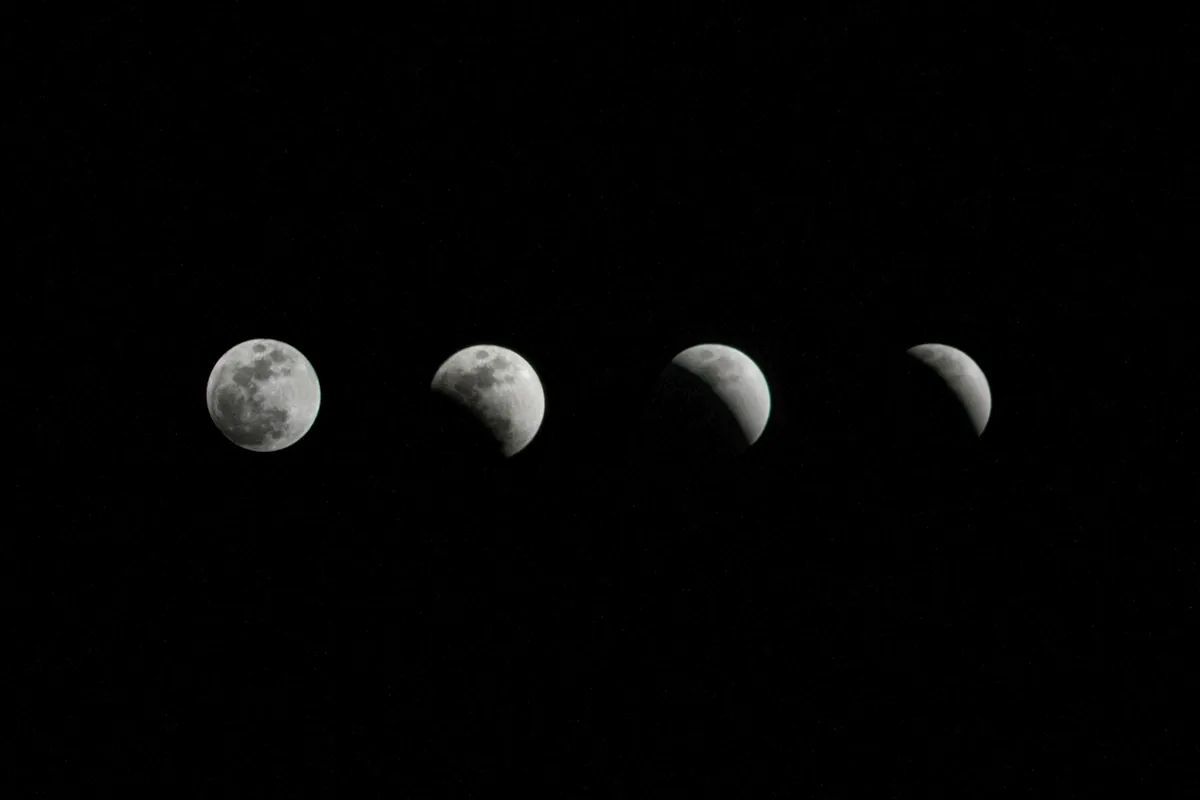
Total Lunar Eclipses
Space and Astronomy Events 2026

Total Lunar Eclipses 2026

Global and country-specific marketing guidance

Overview

Total Lunar Eclipses — United Kingdom, 2026: Marketing Overview

The “Total Lunar Eclipses” event instance in the United Kingdom for 2026 offers a strong thematic hook for seasonal, experiential, and culturally driven marketing campaigns. Lunar events naturally attract attention because they combine science, spectacle, and shareable public interest, making them well suited for brands looking to build timely relevance and audience engagement.

From a campaign perspective, this event can support: - Thematic storytelling around rarity, wonder, transformation, and nighttime experiences
- Limited-time promotions tied to eclipse viewing periods or countdown campaigns
- Social media engagement through live content, event-night activations, and user-generated posts
- Partnership opportunities with media outlets, science organizations, tourism groups, venues, or hospitality brands
- Experiential marketing such as watch parties, branded viewing events, or local community activations

For UK marketers, the event is especially useful as a moment-based campaign anchor—something that can cut through routine promotional noise with a timely, memorable narrative. Brands in travel, retail, food and beverage, entertainment, education, and lifestyle could all adapt the eclipse theme to fit their audience.

The strongest campaign angle is to position the event as a shared national moment: visually compelling, emotionally resonant, and naturally suited to digital amplification.

Global trends and information

Different celebration dates

The dates of total lunar eclipses in 2026 do not actually differ by country in terms of the astronomical event itself—the eclipse happens at one specific moment worldwide. What does differ is:

  1. The local calendar date
  2. The local clock time
  3. Whether the eclipse is visible at all from that country

Total lunar eclipses in 2026

There are two total lunar eclipses in 2026:

  • March 3, 2026
  • August 28, 2026

These dates are usually given in Universal Time (UT/UTC). Because countries are in different time zones, the local date can shift by a day.

How the date can differ by country

A lunar eclipse is visible from the entire night side of Earth, but local time zones mean one country may see it late at night on one date, while another sees it after midnight on the next date.

Example: March 2026 total lunar eclipse

If the peak eclipse occurs on March 3 in UTC:

  • In parts of Europe or Africa, it may still be March 3
  • In parts of Asia or Australia, it could be March 4 locally
  • In parts of the Americas, it might occur earlier on March 2 local time, depending on the exact UTC timing

So the same eclipse can be listed under different local dates in different countries.

Example: August 2026 total lunar eclipse

Likewise, the eclipse dated August 28 in UTC may appear locally as:

  • August 28 in some countries
  • August 27 in parts of the Americas
  • August 29 in parts of Asia-Pacific regions, if the timing crosses midnight there

Visibility also varies

Even when the date converts locally, not every country will get a good view:

  • Some countries will see the entire eclipse
  • Some will see only the beginning or end
  • Some will see none of it, because the Moon is below the horizon

Bottom line

The astronomical event is the same worldwide, but the reported date can differ from country to country because of time zones. So if you’re checking eclipse calendars for different countries in 2026, you may see the same total lunar eclipse listed on different local dates.

Different celebration styles

In 2026, the way people experience and celebrate a Total Lunar Eclipse will likely vary widely by country, shaped by local astronomy culture, religious traditions, public event infrastructure, and even how visible the eclipse is from that region.

1. Countries with strong public astronomy programs

In places like the United States, Canada, Australia, Japan, and parts of Europe, total lunar eclipses are often treated as major public skywatching events. Expect: - Observatory-led viewing nights - Planetarium programming - Museum partnerships - Livestreams and educational campaigns on social media - Branded public outreach from science agencies and universities

In these countries, the eclipse is often positioned as a science engagement moment—family-friendly, highly photographed, and promoted as a shared national or regional experience.

2. Countries where the eclipse connects with cultural or spiritual meaning

In countries such as India, China, Thailand, and Indonesia, lunar eclipses may be viewed through both scientific and traditional lenses. Celebrations or observances could include: - Religious rituals or prayers - Fasting or temporary avoidance of food during the eclipse in some communities - Myth-based storytelling tied to the Moon - Increased temple or family observance alongside modern media coverage

The atmosphere may be less about “celebration” in a festive sense and more about reflection, ritual, and meaning, depending on the community.

3. Latin American countries with strong communal viewing culture

In countries like Mexico, Argentina, Chile, Peru, and Colombia, eclipses often become community events that blend science communication with public enthusiasm. You might see: - Plaza gatherings - School-led astronomy activities - Local media countdowns - Tourism tie-ins in dark-sky or heritage locations - Social sharing around the “Blood Moon” visual appeal

Here, the eclipse can become both a public spectacle and a civic event, especially when visibility is strong.

4. Countries where visibility shapes the scale of celebration

Not every country will have a good view of each total lunar eclipse in 2026. That matters. If the eclipse occurs below the horizon or during daylight hours in a certain country, celebrations may shift to: - Virtual events - Broadcast viewings - Educational recaps rather than live gatherings - International content sharing from better-positioned countries

So the level of public excitement often depends less on the eclipse itself and more on whether people can actually see totality locally.

5. Countries with growing astro-tourism markets

Places known for dark skies—such as Chile, New Zealand, Namibia, and parts of the Middle East—may frame a 2026 total lunar eclipse as a tourism opportunity. Likely differences include: - Eclipse-themed travel packages - Night-sky festivals - Hotel and resort promotions - Guided photography tours - Collaborations between tourism boards and astronomy groups

In these markets, the eclipse becomes a destination experience, not just an astronomical event.

6. Urban vs. rural differences within the same country

Even within one country, the celebration can differ sharply: - Major cities may focus on organized public programming, media buzz, and influencer-friendly events. - Rural areas may offer clearer skies, more traditional interpretations, and stronger community-based gatherings.

This is especially important for marketers, educators, and event organizers: the same eclipse can carry very different meanings depending on audience segment and location.

7. The role of digital culture in 2026

By 2026, one of the biggest cross-country differences may come from how eclipses are packaged online: - Some countries will emphasize scientific accuracy and expert commentary - Others will lean into mystical or symbolic storytelling - Social platforms may amplify eclipse photography, time-lapse video, and “Blood Moon” branding - News outlets may frame the event as either a rare celestial spectacle, a spiritual moment, or a tourism draw

In practice, the eclipse will be experienced both locally and globally at once.

Bottom line

The celebration of total lunar eclipses in 2026 will likely differ across countries in four main ways: 1. Scientific vs. spiritual framing 2. Live visibility vs. remote viewing 3. Public institution involvement 4. Tourism and community activation

In some places, it will feel like a science festival. In others, a sacred event. Elsewhere, it may be a social media phenomenon, a school activity, or a travel product.

If you want, I can also break this down by specific countries or identify which 2026 total lunar eclipse is visible where.

Most celebrated in

There isn’t really a reliable way to rank countries by who celebrates total lunar eclipses “the most enthusiastically” in 2026, because eclipse excitement usually depends more on:

  • Visibility in that region
  • Time of day/night when it occurs
  • Weather conditions
  • Local astronomy culture and media coverage
  • Cultural or spiritual traditions tied to lunar events

That said, countries that often show strong public interest in major lunar eclipses tend to include:

  • India
  • China
  • Japan
  • United States
  • Mexico
  • Indonesia
  • Philippines
  • Australia
  • Argentina
  • Chile

These countries often have a mix of: - large astronomy communities, - active public observatories, - strong science media, - and/or cultural traditions connected to moon events.

For 2026 specifically, the countries most likely to be especially engaged would usually be the ones where the total lunar eclipse is clearly visible at a convenient local time. Public enthusiasm is often highest when people can easily step outside and watch it without special equipment.

If you want, I can also give you: 1. the 2026 total lunar eclipse dates,
2. which countries will have the best visibility, or
3. a country-by-country list of likely viewing hotspots.

Global trends

In 2026, total lunar eclipses are part of a broader global pattern tied to predictable celestial cycles rather than shifting social or economic “trends.” The key global trend is that 2026 will feature two total lunar eclipses, continuing the normal rhythm of eclipse seasons that occur when the Sun, Earth, and Moon align closely enough for Earth’s shadow to fully cover the Moon.

Global eclipse pattern in 2026

The two total lunar eclipses in 2026 are expected in:

  • March 3, 2026
  • August 28, 2026

This reflects a recurring astronomical trend: lunar eclipses often come in pairs or clusters within a calendar year, depending on how the Moon’s orbit lines up with Earth’s orbital plane.

A major global trend with lunar eclipses is that different regions experience very different viewing conditions. Because a lunar eclipse is visible anywhere the Moon is above the horizon, each event tends to have wide but uneven geographic reach.

For 2026, the broad visibility pattern is:

  • March 2026 eclipse: best viewed across parts of Asia, Australia, the Pacific, and the Americas, with some regions seeing the full event and others only partial stages depending on local moonrise or moonset.
  • August 2026 eclipse: likely most favorable for Europe, Africa, Asia, and Australia, again with regional variation in whether observers see the entire eclipse.

This creates a recurring global engagement trend where eclipse interest spikes regionally based on time zone convenience and nighttime visibility.

Another global trend around total lunar eclipses is the way they generate:

  • Short-term surges in search traffic
  • Strong social media engagement
  • Increased participation in public astronomy events
  • Higher demand for observatory livestreams and educational content

Unlike solar eclipses, total lunar eclipses are easy to observe safely with the naked eye, making them especially accessible for the general public. In 2026, this will likely continue the trend of eclipses serving as mass-participation astronomy moments, especially in urban areas where major observatories, science centers, and creators amplify interest online.

While lunar eclipses do not drive tourism as strongly as total solar eclipses, there is still a growing global trend toward:

  • Astro-tourism packages
  • Night sky festivals
  • Community viewing parties
  • Destination-based stargazing experiences

In 2026, destinations with dark skies and favorable weather during the eclipse dates may use these events in tourism marketing, particularly in regions where the eclipses are fully visible.

Globally, total lunar eclipses continue to be used as:

  • STEM education opportunities
  • Public science communication moments
  • Entry points for amateur astronomy

In 2026, schools, planetariums, museums, and science media outlets are likely to frame these eclipses as opportunities to explain: - Earth’s shadow geometry - Orbital mechanics - Why the Moon appears red during totality - The difference between lunar and solar eclipses

Climate and observation conditions

A practical worldwide trend affecting eclipse viewing is the growing use of:

  • Cloud-cover forecasting tools
  • Mobile astronomy apps
  • Real-time livestream backups

Because weather remains the biggest obstacle to viewing, more observers globally now combine in-person viewing with digital alternatives. That trend should remain strong in 2026.

Bottom line

The main global trend for total lunar eclipses in 2026 is straightforward: two widely visible total lunar eclipses will create major, regionally staggered spikes in public interest, educational outreach, and online engagement. The events fit into long-term astronomical cycles, but their cultural impact continues to grow because they are easy to watch, highly photogenic, and globally shareable.

If you want, I can also turn this into: - a brief market-style trend summary - a regional visibility breakdown - or a 2026 eclipse content calendar angle for marketers.

Ideas for 2026

Build a UK-wide “Blood Moon 2026” campaign around the 3 March 2026 total lunar eclipse, partnering with planetariums, heritage sites, and rooftop venues in cities like London, Manchester, and Edinburgh to host branded late-night viewing events with limited-edition merch, themed food, and shareable AR filters. Create a cross-channel content series timed to the eclipse countdown—featuring “best UK viewing spots” maps, weather-triggered social ads, and collaborations with astro-photographers and travel brands to drive bookings, footfall, and sponsorships.

Technology trends

In the United Kingdom, brands and event organisers could use AR filters and mobile apps that let people point their phones at the sky to see eclipse timelines, viewing tips, and branded educational content layered over the moon in real time. Museums, observatories, and tourism partners could also run ticketed livestreams with astronomers, QR-enabled city trails, and location-based push alerts that guide people to the best viewing spots while unlocking sponsor offers or limited-edition merchandise.

Country-specific information

United Kingdom

Popularity

“Total Lunar Eclipses” is likely to see strong but highly event-driven popularity in the United Kingdom in 2026, rather than steady year-round interest.

What to expect in 2026

In the UK, search and public interest for astronomy topics like total lunar eclipses typically spikes around: - The weeks before the eclipse - The day of the event - The day after, when people look for photos, explanations, and recap content

For 2026, popularity will depend largely on: 1. Whether the eclipse is visible from the UK 2. How well it can be seen 3. Media coverage from broadcasters, publishers, and science outlets 4. Weather conditions, which strongly affect UK engagement with skywatching events

Popularity pattern

From a marketing perspective, the keyword is likely to behave like a seasonal/event-led trend: - Low baseline search volume most of the year - Sharp short-term surges near eclipse dates - High social amplification if the eclipse is visible and visually dramatic

In practical terms

If you’re evaluating this as a content or campaign opportunity in the UK for 2026: - It has good short-term traffic potential - It is not likely to be a consistently high-volume evergreen topic - It performs best when paired with related search intent such as: - “total lunar eclipse UK 2026” - “when is the lunar eclipse in the UK” - “blood moon UK 2026” - “how to watch lunar eclipse UK” - “lunar eclipse time tonight UK”

Marketing takeaway

For UK audiences in 2026, “Total Lunar Eclipses” should be treated as a high-interest, time-sensitive trend, not a broad always-on topic. If the eclipse is visible in the UK, popularity could become very strong for a short period, especially across search, news, and social channels.

If you want, I can also give you: 1. a Google Trends-style popularity forecast for the UK in 2026, or
2. a month-by-month content strategy around total lunar eclipses in the UK.

Trends

For the United Kingdom, there isn’t really a uniquely UK-specific “trend” in total lunar eclipses for 2026 in the sense of a changing national pattern. Lunar eclipses are driven by global orbital mechanics, so the key UK-relevant trend is really about visibility and timing from the UK.

What stands out for the UK in 2026

  • No total lunar eclipse is well placed for UK observers in 2026.
  • The main total lunar eclipse in 2026 is not favorably visible from the United Kingdom.
  • For UK skywatchers, this continues a familiar pattern where some years offer excellent eclipse viewing and others offer events that are either:
  • below the horizon,
  • only partially visible,
  • or happen in daylight from the UK.

UK-specific viewing pattern in 2026

A practical trend for the UK is that lunar eclipse visibility remains highly dependent on local moonrise/moonset timing, and in 2026 that works against British observers for total phases. That means:

  • Less public visibility and media buzz compared with years when a total eclipse is visible at convenient evening or pre-dawn hours.
  • More interest in livestreams and international coverage from UK audiences, since the best views are likely to come from other regions.
  • Astronomy groups in the UK may focus more on partial/penumbral events or other headline sky events instead of promoting a major total lunar eclipse spectacle.

Broader UK audience trend

In the UK, lunar eclipses tend to generate the most engagement when they are: - visible in full, - at sociable hours, - and not heavily affected by the UK’s often cloudy weather.

Since 2026 does not deliver a strong total lunar eclipse experience for UK viewers, interest may be more subdued than in stronger eclipse years. In marketing or public-engagement terms, this means: - lower mass-audience excitement, - more niche interest from dedicated astronomy followers, - and stronger reliance on digital content rather than in-person observation events.

If you want, I can also give you a UK-specific 2026 eclipse visibility calendar with exact dates and whether each eclipse is total, partial, or penumbral from the UK.

Cultural significance

In the United Kingdom, a total lunar eclipse in 2026 is likely to carry more public, educational, and symbolic significance than deep traditional cultural meaning.

Why it matters in the UK context

1. A shared sky event

In the UK, total lunar eclipses often become national moments of curiosity and participation. Because they can usually be viewed without special equipment, they tend to attract: - casual stargazers - families and school groups - amateur astronomy clubs - media coverage from the BBC, newspapers, and science organizations

This gives the eclipse a kind of collective cultural role: people across different regions can look up and experience the same event together.

British culture often frames events like total lunar eclipses through: - public science outreach - museum programming - observatory events - school learning - coverage from organizations like the Royal Observatory Greenwich and the BBC Sky at Night community

So in 2026, the significance is likely to be less about myth or ritual and more about science engagement, public education, and wonder. For brands, institutions, and media, these events are ideal for sparking attention around STEM, discovery, and shared experience.

3. Historical and literary resonance

While modern Britain does not generally attach major religious or ceremonial meaning to lunar eclipses, eclipses do connect to a wider British cultural tradition of: - fascination with astronomy - maritime navigation history - medieval chronicles and omens - literary uses of unusual sky events as symbols of change, uncertainty, or awe

That means a 2026 total lunar eclipse may also be discussed in a broader cultural frame of heritage, storytelling, and the British relationship with the night sky.

4. Seasonal and social atmosphere

In the UK, sky events often gain significance from the way they fit into everyday life: - late-night or early-morning viewing can create a sense of occasion - weather uncertainty adds anticipation - social media helps turn the event into a communal experience

In practice, this means the eclipse may become a cultural talking point not because of ancient ritual importance, but because it creates a temporary shared moment of awe in a highly connected society.

Is there any traditional folklore significance?

There is some older European and British folklore around eclipses being linked to: - omens - changes in power - divine warning - unusual natural disturbances

But in contemporary UK culture, those interpretations are largely historical rather than widely lived beliefs.

What 2026 could mean specifically

If a total lunar eclipse is visible from the UK in 2026, its significance will most likely center on: - public astronomy events - media attention and social conversation - educational programming - a sense of national participation in a rare celestial event

Bottom line

In the United Kingdom, the cultural significance of total lunar eclipses in 2026 is likely to be about collective viewing, science culture, public fascination, and symbolic wonder, rather than strong traditional ritual meaning. It’s a moment where astronomy becomes part of mainstream cultural life.

If you want, I can also give you: 1. the exact total lunar eclipse dates in 2026 visible from the UK, or
2. a more historical/folklore-focused version of the explanation.

How it is celebrated

In the United Kingdom, a total lunar eclipse in 2026 would not typically be “celebrated” as a formal cultural holiday, but it would usually be observed as a public astronomy event.

Here’s how it’s commonly marked:

  • Skywatching gatherings: Astronomy clubs, observatories, and science centers often host public viewing sessions.
  • Educational events: Museums, planetariums, and schools may organize talks, workshops, or livestreams explaining the science behind the eclipse.
  • Media coverage: News outlets and weather services often publish viewing guides, timing information, and photography tips.
  • Photography and social sharing: Amateur astronomers and the general public often treat it as a special photo opportunity, especially because a total lunar eclipse can create a dramatic “blood moon.”
  • Community interest rather than tradition: In the UK, the event is generally approached as a scientific and social occasion rather than a religious or traditional celebration.

Weather plays a big role in the UK, so many people also follow online streams or broadcasts if cloud cover blocks the view.

If you want, I can also tell you whether a total lunar eclipse is visible from the UK in 2026 and the best way to view it.

Marketing advice

In the United Kingdom, position Total Lunar Eclipse 2026 content around “best viewing times in GMT/BST,” local weather contingency tips, and region-specific visibility updates, as UK audiences respond well to practical, location-aware planning information. Build campaigns with SEO and paid social around search terms like “UK lunar eclipse 2026,” partner with planetariums, science centres, and astronomy groups for credibility, and schedule email/social reminders 24–48 hours before the event when interest typically spikes.

Marketing ideas

Build a UK-focused “Blood Moon 2026” campaign that partners with planetariums, observatories, and countryside glamping sites to sell eclipse viewing packages, limited-edition merchandise, and themed food-and-drink experiences. Run a social-first content series with countdown posts, eclipse photography tips, and live-stream sponsorships, then support it with geo-targeted ads in major cities and family attractions to drive event bookings. Collaborate with schools, museums, and STEM brands on educational kits and watch-party activations to broaden reach while giving sponsors a strong community angle.

Marketing channels

Search and social media are likely the strongest channels for promoting Total Lunar Eclipses in the United Kingdom in 2026, because people will actively look for viewing times, locations, and weather-friendly advice as the event approaches. PR and news media are also highly effective, since eclipses have built-in public interest and can earn coverage across science, lifestyle, and local outlets. Email marketing works well for astronomy groups, venues, and tourism brands to re-engage existing audiences with timely reminders, event updates, and viewing tips.

Marketing examples

Here’s a strong hypothetical 2026 UK marketing campaign for Total Lunar Eclipses, designed as if it were being promoted by a tourism board, media partner, science institution, or national brand coalition.


Campaign Title

“Britain After Dark: The Blood Moon Experience”

Campaign Summary

A nationwide integrated campaign built around a Total Lunar Eclipse visible in the United Kingdom in 2026, positioning the event as a rare shared cultural moment. The campaign blends science, spectacle, travel, social media, local events, and branded experiences to drive public engagement, destination visits, media coverage, and sponsorship value.

The core idea: turn a celestial event into a mass-participation nighttime experience across the UK.


Campaign Objectives

  1. Drive national awareness of the eclipse date and viewing opportunities
  2. Increase tourism and footfall in designated dark-sky and event locations
  3. Generate social conversation through user-created eclipse content
  4. Create sponsor and partnership value for media, retail, travel, and science organisations
  5. Position the event as both educational and emotionally memorable

Target Audience

  • Families looking for memorable free experiences
  • Young adults and Gen Z interested in social-first live events
  • Amateur astronomers and science enthusiasts
  • Domestic travellers seeking weekend experiences
  • Schools, educators, and community groups
  • Photography and content-creator communities

Core Insight

Most people don’t plan around astronomical events because they feel too technical, too niche, or too easy to miss.
The campaign reframes the eclipse as:

  • Accessible: “Look up and be part of it”
  • Social: “Experience it together”
  • Limited: “A rare moment you won’t want to miss”
  • Shareable: “One night, one sky, one national conversation”

Creative Platform

“When the Moon Turns Red, Britain Looks Up”

This line gives the campaign: - emotional scale
- visual drama
- social media utility
- strong press headline potential


Example Campaign Structure

1. Awareness Phase: “Save the Night”

Timeline: 8–12 weeks before the eclipse

Channels: - Paid social - YouTube pre-roll - Digital out-of-home in rail stations and city centres - PR with broadcasters and science media - Partner email databases

Tactics: - Short teaser films showing iconic UK landscapes under a red moon - Countdown creative: “In 60 days, Britain looks up” - Media partnerships with BBC-style science programming, local radio, and weather apps - Sponsored content explaining where and when to watch

Sample copy: - “This autumn, the Moon puts on its rarest show.” - “One night. One sky. One Britain-wide moment.” - “Set your reminder for the 2026 Total Lunar Eclipse.”


2. Consideration Phase: “Find Your Viewing Spot”

Timeline: 4–8 weeks before

Digital Hub: A central website/app experience featuring: - eclipse timing by UK region - cloud-cover forecast integration - best viewing locations - local event listings - dark-sky destination guides - educational content - branded AR feature simulating the eclipse

Interactive tools: - “Best Place to Watch Near Me” - eclipse reminder signup via SMS/email - downloadable photography guide - school activity packs

Partnership opportunities: - National Trust / English Heritage-style moonlit site openings - Train operators promoting late-evening travel to viewing destinations - Outdoor retailers selling “Eclipse Night Kits” - Hospitality groups offering eclipse supper events or overnight packages


3. Activation Phase: “The Night Britain Looks Up”

Timeline: eclipse week and night

This is the high-impact live moment.

Live experiences: - Public viewing events in London, Manchester, Edinburgh, Cardiff, Belfast, and dark-sky parks - Hosted telescopes and science presenters - Live-streamed countdown with astronomers, creators, and broadcasters - Giant public screens in selected cities showing a live feed and educational commentary - Eclipse-themed menus, hotel packages, rooftop events, and late-night museum openings

Brand activations could include: - Hot drink sampling at viewing sites - Telescope brand demos - Smartphone night-photography workshops - Limited-edition “Blood Moon” food and beverage products

Social campaign hashtag: #BritainLooksUp

Supporting tags: - #BloodMoonUK - #LunarEclipse2026 - #MoonlitBritain

UGC mechanic: A national “best eclipse photo” competition with categories for: - city skyline - countryside - family moment - creator reel - school/community