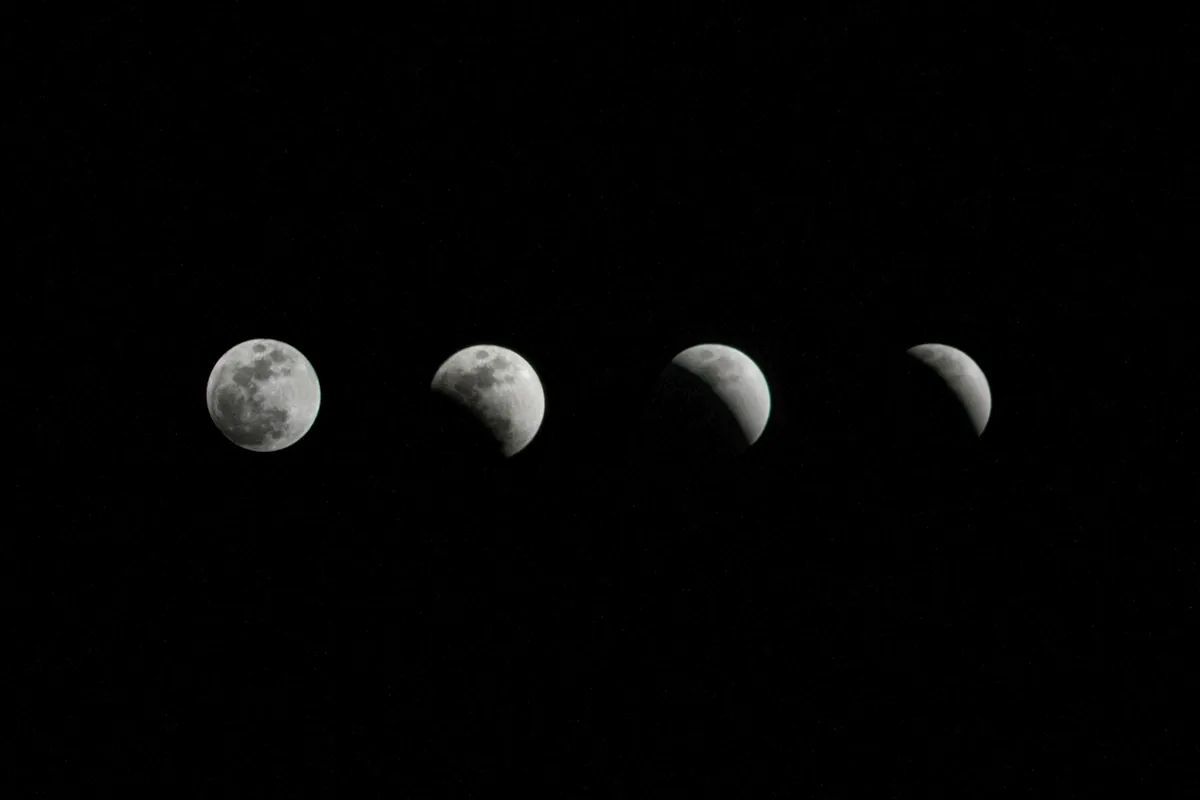
Total Lunar Eclipses in United Kingdom
Country-specific marketing context and ideas
Popularity in United Kingdom
“Total Lunar Eclipses” is likely to see strong but highly event-driven popularity in the United Kingdom in 2026, rather than steady year-round interest.
What to expect in 2026
In the UK, search and public interest for astronomy topics like total lunar eclipses typically spikes around: - The weeks before the eclipse - The day of the event - The day after, when people look for photos, explanations, and recap content
For 2026, popularity will depend largely on: 1. Whether the eclipse is visible from the UK 2. How well it can be seen 3. Media coverage from broadcasters, publishers, and science outlets 4. Weather conditions, which strongly affect UK engagement with skywatching events
Popularity pattern
From a marketing perspective, the keyword is likely to behave like a seasonal/event-led trend: - Low baseline search volume most of the year - Sharp short-term surges near eclipse dates - High social amplification if the eclipse is visible and visually dramatic
In practical terms
If you’re evaluating this as a content or campaign opportunity in the UK for 2026: - It has good short-term traffic potential - It is not likely to be a consistently high-volume evergreen topic - It performs best when paired with related search intent such as: - “total lunar eclipse UK 2026” - “when is the lunar eclipse in the UK” - “blood moon UK 2026” - “how to watch lunar eclipse UK” - “lunar eclipse time tonight UK”
Marketing takeaway
For UK audiences in 2026, “Total Lunar Eclipses” should be treated as a high-interest, time-sensitive trend, not a broad always-on topic. If the eclipse is visible in the UK, popularity could become very strong for a short period, especially across search, news, and social channels.
If you want, I can also give you:
1. a Google Trends-style popularity forecast for the UK in 2026, or
2. a month-by-month content strategy around total lunar eclipses in the UK.
Trends in United Kingdom
For the United Kingdom, there isn’t really a uniquely UK-specific “trend” in total lunar eclipses for 2026 in the sense of a changing national pattern. Lunar eclipses are driven by global orbital mechanics, so the key UK-relevant trend is really about visibility and timing from the UK.
What stands out for the UK in 2026
- No total lunar eclipse is well placed for UK observers in 2026.
- The main total lunar eclipse in 2026 is not favorably visible from the United Kingdom.
- For UK skywatchers, this continues a familiar pattern where some years offer excellent eclipse viewing and others offer events that are either:
- below the horizon,
- only partially visible,
- or happen in daylight from the UK.
UK-specific viewing pattern in 2026
A practical trend for the UK is that lunar eclipse visibility remains highly dependent on local moonrise/moonset timing, and in 2026 that works against British observers for total phases. That means:
- Less public visibility and media buzz compared with years when a total eclipse is visible at convenient evening or pre-dawn hours.
- More interest in livestreams and international coverage from UK audiences, since the best views are likely to come from other regions.
- Astronomy groups in the UK may focus more on partial/penumbral events or other headline sky events instead of promoting a major total lunar eclipse spectacle.
Broader UK audience trend
In the UK, lunar eclipses tend to generate the most engagement when they are: - visible in full, - at sociable hours, - and not heavily affected by the UK’s often cloudy weather.
Since 2026 does not deliver a strong total lunar eclipse experience for UK viewers, interest may be more subdued than in stronger eclipse years. In marketing or public-engagement terms, this means: - lower mass-audience excitement, - more niche interest from dedicated astronomy followers, - and stronger reliance on digital content rather than in-person observation events.
If you want, I can also give you a UK-specific 2026 eclipse visibility calendar with exact dates and whether each eclipse is total, partial, or penumbral from the UK.
Cultural significance
In the United Kingdom, a total lunar eclipse in 2026 is likely to carry more public, educational, and symbolic significance than deep traditional cultural meaning.
Why it matters in the UK context
1. A shared sky event
In the UK, total lunar eclipses often become national moments of curiosity and participation. Because they can usually be viewed without special equipment, they tend to attract: - casual stargazers - families and school groups - amateur astronomy clubs - media coverage from the BBC, newspapers, and science organizations
This gives the eclipse a kind of collective cultural role: people across different regions can look up and experience the same event together.
2. Strong link to science communication
British culture often frames events like total lunar eclipses through: - public science outreach - museum programming - observatory events - school learning - coverage from organizations like the Royal Observatory Greenwich and the BBC Sky at Night community
So in 2026, the significance is likely to be less about myth or ritual and more about science engagement, public education, and wonder. For brands, institutions, and media, these events are ideal for sparking attention around STEM, discovery, and shared experience.
3. Historical and literary resonance
While modern Britain does not generally attach major religious or ceremonial meaning to lunar eclipses, eclipses do connect to a wider British cultural tradition of: - fascination with astronomy - maritime navigation history - medieval chronicles and omens - literary uses of unusual sky events as symbols of change, uncertainty, or awe
That means a 2026 total lunar eclipse may also be discussed in a broader cultural frame of heritage, storytelling, and the British relationship with the night sky.
4. Seasonal and social atmosphere
In the UK, sky events often gain significance from the way they fit into everyday life: - late-night or early-morning viewing can create a sense of occasion - weather uncertainty adds anticipation - social media helps turn the event into a communal experience
In practice, this means the eclipse may become a cultural talking point not because of ancient ritual importance, but because it creates a temporary shared moment of awe in a highly connected society.
Is there any traditional folklore significance?
There is some older European and British folklore around eclipses being linked to: - omens - changes in power - divine warning - unusual natural disturbances
But in contemporary UK culture, those interpretations are largely historical rather than widely lived beliefs.
What 2026 could mean specifically
If a total lunar eclipse is visible from the UK in 2026, its significance will most likely center on: - public astronomy events - media attention and social conversation - educational programming - a sense of national participation in a rare celestial event
Bottom line
In the United Kingdom, the cultural significance of total lunar eclipses in 2026 is likely to be about collective viewing, science culture, public fascination, and symbolic wonder, rather than strong traditional ritual meaning. It’s a moment where astronomy becomes part of mainstream cultural life.
If you want, I can also give you:
1. the exact total lunar eclipse dates in 2026 visible from the UK, or
2. a more historical/folklore-focused version of the explanation.
How it is celebrated
In the United Kingdom, a total lunar eclipse in 2026 would not typically be “celebrated” as a formal cultural holiday, but it would usually be observed as a public astronomy event.
Here’s how it’s commonly marked:
- Skywatching gatherings: Astronomy clubs, observatories, and science centers often host public viewing sessions.
- Educational events: Museums, planetariums, and schools may organize talks, workshops, or livestreams explaining the science behind the eclipse.
- Media coverage: News outlets and weather services often publish viewing guides, timing information, and photography tips.
- Photography and social sharing: Amateur astronomers and the general public often treat it as a special photo opportunity, especially because a total lunar eclipse can create a dramatic “blood moon.”
- Community interest rather than tradition: In the UK, the event is generally approached as a scientific and social occasion rather than a religious or traditional celebration.
Weather plays a big role in the UK, so many people also follow online streams or broadcasts if cloud cover blocks the view.
If you want, I can also tell you whether a total lunar eclipse is visible from the UK in 2026 and the best way to view it.
Marketing advice
In the United Kingdom, position Total Lunar Eclipse 2026 content around “best viewing times in GMT/BST,” local weather contingency tips, and region-specific visibility updates, as UK audiences respond well to practical, location-aware planning information. Build campaigns with SEO and paid social around search terms like “UK lunar eclipse 2026,” partner with planetariums, science centres, and astronomy groups for credibility, and schedule email/social reminders 24–48 hours before the event when interest typically spikes.
Marketing ideas
Build a UK-focused “Blood Moon 2026” campaign that partners with planetariums, observatories, and countryside glamping sites to sell eclipse viewing packages, limited-edition merchandise, and themed food-and-drink experiences. Run a social-first content series with countdown posts, eclipse photography tips, and live-stream sponsorships, then support it with geo-targeted ads in major cities and family attractions to drive event bookings. Collaborate with schools, museums, and STEM brands on educational kits and watch-party activations to broaden reach while giving sponsors a strong community angle.
Marketing channels
Search and social media are likely the strongest channels for promoting Total Lunar Eclipses in the United Kingdom in 2026, because people will actively look for viewing times, locations, and weather-friendly advice as the event approaches. PR and news media are also highly effective, since eclipses have built-in public interest and can earn coverage across science, lifestyle, and local outlets. Email marketing works well for astronomy groups, venues, and tourism brands to re-engage existing audiences with timely reminders, event updates, and viewing tips.
Marketing examples
Here’s a strong hypothetical 2026 UK marketing campaign for Total Lunar Eclipses, designed as if it were being promoted by a tourism board, media partner, science institution, or national brand coalition.
Campaign Title
“Britain After Dark: The Blood Moon Experience”
Campaign Summary
A nationwide integrated campaign built around a Total Lunar Eclipse visible in the United Kingdom in 2026, positioning the event as a rare shared cultural moment. The campaign blends science, spectacle, travel, social media, local events, and branded experiences to drive public engagement, destination visits, media coverage, and sponsorship value.
The core idea: turn a celestial event into a mass-participation nighttime experience across the UK.
Campaign Objectives
- Drive national awareness of the eclipse date and viewing opportunities
- Increase tourism and footfall in designated dark-sky and event locations
- Generate social conversation through user-created eclipse content
- Create sponsor and partnership value for media, retail, travel, and science organisations
- Position the event as both educational and emotionally memorable
Target Audience
- Families looking for memorable free experiences
- Young adults and Gen Z interested in social-first live events
- Amateur astronomers and science enthusiasts
- Domestic travellers seeking weekend experiences
- Schools, educators, and community groups
- Photography and content-creator communities
Core Insight
Most people don’t plan around astronomical events because they feel too technical, too niche, or too easy to miss.
The campaign reframes the eclipse as:
- Accessible: “Look up and be part of it”
- Social: “Experience it together”
- Limited: “A rare moment you won’t want to miss”
- Shareable: “One night, one sky, one national conversation”
Creative Platform
“When the Moon Turns Red, Britain Looks Up”
This line gives the campaign:
- emotional scale
- visual drama
- social media utility
- strong press headline potential
Example Campaign Structure
1. Awareness Phase: “Save the Night”
Timeline: 8–12 weeks before the eclipse
Channels: - Paid social - YouTube pre-roll - Digital out-of-home in rail stations and city centres - PR with broadcasters and science media - Partner email databases
Tactics: - Short teaser films showing iconic UK landscapes under a red moon - Countdown creative: “In 60 days, Britain looks up” - Media partnerships with BBC-style science programming, local radio, and weather apps - Sponsored content explaining where and when to watch
Sample copy: - “This autumn, the Moon puts on its rarest show.” - “One night. One sky. One Britain-wide moment.” - “Set your reminder for the 2026 Total Lunar Eclipse.”
2. Consideration Phase: “Find Your Viewing Spot”
Timeline: 4–8 weeks before
Digital Hub: A central website/app experience featuring: - eclipse timing by UK region - cloud-cover forecast integration - best viewing locations - local event listings - dark-sky destination guides - educational content - branded AR feature simulating the eclipse
Interactive tools: - “Best Place to Watch Near Me” - eclipse reminder signup via SMS/email - downloadable photography guide - school activity packs
Partnership opportunities: - National Trust / English Heritage-style moonlit site openings - Train operators promoting late-evening travel to viewing destinations - Outdoor retailers selling “Eclipse Night Kits” - Hospitality groups offering eclipse supper events or overnight packages
3. Activation Phase: “The Night Britain Looks Up”
Timeline: eclipse week and night
This is the high-impact live moment.
Live experiences: - Public viewing events in London, Manchester, Edinburgh, Cardiff, Belfast, and dark-sky parks - Hosted telescopes and science presenters - Live-streamed countdown with astronomers, creators, and broadcasters - Giant public screens in selected cities showing a live feed and educational commentary - Eclipse-themed menus, hotel packages, rooftop events, and late-night museum openings
Brand activations could include: - Hot drink sampling at viewing sites - Telescope brand demos - Smartphone night-photography workshops - Limited-edition “Blood Moon” food and beverage products
Social campaign hashtag: #BritainLooksUp
Supporting tags: - #BloodMoonUK - #LunarEclipse2026 - #MoonlitBritain
UGC mechanic: A national “best eclipse photo” competition with categories for: - city skyline - countryside - family moment - creator reel - school/community